Bike Fit Basics: End Numb Hands and Sore Knees
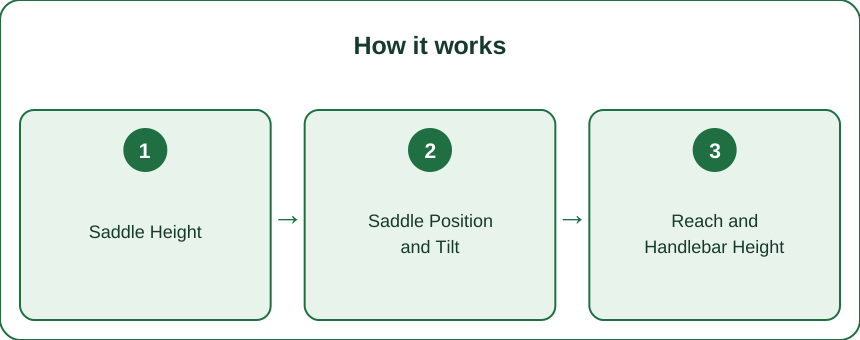
Quick Answer: Most cycling pain is a fit problem, not a fitness problem. Check three things in this order: saddle height (25–30° of knee bend at the bottom of the stroke — pain at the front of the knee usually means too low, back of the knee means too high), saddle level and fore-aft (level it first; kneecap roughly over the pedal axle with cranks horizontal), and reach and bar height (numb hands or burning shoulders usually mean the bars are too low or too far). Change one thing at a time, by about 5mm, and ride before adjusting again.
Six miles in, your hands go numb. By mile ten your right knee has an opinion, and your neck has joined it.
The usual conclusion is that you need to ride more. The usual reality is that your saddle is about half an inch too low and your bars are an inch too far away — and both are fixable in ten minutes with a multi-tool.

Saddle height: the one that matters most
At the bottom of the pedal stroke, your knee should keep a slight bend of about 25–30 degrees. Straight-legged means too high; heavily bent means too low.
The fast method: sit on the saddle, put your heel on the pedal at its lowest point. Your leg should be straight, with your hips level. When you move your foot to its normal position (ball of foot over the pedal axle), that produces roughly the right bend. It gets you within a few millimeters in about thirty seconds.
What the pain tells you:
| Symptom | Likely cause |
|---|---|
| Pain at the front of the knee | Saddle too low (or too far forward) |
| Pain at the back of the knee | Saddle too high (or too far back) |
| Hips rocking side to side | Saddle too high |
| Feeling cramped, no power | Saddle too low |
Adjust in 5mm increments and ride at least a few miles before changing again. Your body needs a ride or two to tell you the truth, and stacking three adjustments at once means you learn nothing.
Saddle position and tilt
Level it first. Put a straightedge or a phone level across the saddle. Nose-down slides you forward onto your hands — a huge cause of numb hands and sore wrists. Nose-up puts pressure exactly where nothing should be pressing. Level (or within a degree of it) is right for most people.
Then set fore-aft. With the cranks horizontal (3 and 9 o’clock), your forward kneecap should sit roughly over the pedal axle. Drop a weighted string from just below your kneecap and see where it lands. Slide the saddle on its rails to adjust.
Small changes here make disproportionate differences. A centimeter of fore-aft changes both your knee angle and your reach at the same time — which is why you always change one thing at a time.
A note on the saddle itself: if you have persistent soft-tissue discomfort after the fit is right, the saddle shape may be wrong for you. Saddle width should match your sit bone width, and many bike shops will measure yours in five minutes for free. A correctly-sized saddle changes more than a more expensive one.
Reach and handlebar height
If your hands go numb, your shoulders burn, or your neck aches, the bars are probably too low or too far away.
What you want: elbows softly bent, never locked, a relaxed upper body, and your weight shared between your sit bones and your hands rather than dumped onto your palms. If you can’t comfortably ride with your hands off the bars for a second on a quiet stretch, too much weight is going forward.
How to fix it:
- Raise the bars. Move spacers below the stem, or flip the stem to a positive angle. This is the most underrated comfort fix in cycling, and it costs nothing.
- Shorten the reach with a shorter stem (10mm at a time — a 90mm instead of a 100mm stem is a noticeable change).
- Rotate the bars slightly so the drops or grips sit at a more natural wrist angle.
Comfort-oriented setups sit the bars level with the saddle or slightly above. Aggressive drops look fast and cost most recreational riders their necks.
The numb hands fix kit
Numbness is pressure plus time — break either one and it goes away.
- Raise the bars to shift weight off your hands (do this first).
- Wear padded gloves. Cheap, immediate, effective.
- Change hand position every few minutes. Hoods, tops, drops — or on flat bars, add bar ends to create a second position. This alone solves a lot of cases.
- Grip lightly. A death grip transmits every vibration into your ulnar nerve. Think “holding a bird.”
- Soften the contact points — thicker bar tape, gel pads under the tape, or slightly wider tires at lower pressure.
- Check your saddle tilt again. A nose-down saddle undoes everything else on this list.
Your hands should finish a ride feeling like hands.
When should you get a professional bike fit?
DIY adjustments solve the large majority of comfort problems. A pro fit ($150–350 typically) is worth it when:
- Pain persists after you’ve methodically worked through the basics
- You ride long distances, or you’re increasing volume substantially
- You have an asymmetry, a previous injury, or a leg-length difference
- You’re buying a new bike and want the size right the first time
- Something hurts and you can’t figure out what’s causing it
Bodies are asymmetric in ways mirrors don’t reveal, and a good fitter watches you pedal from angles you can’t see. For a long-distance rider, it’s usually the highest-value money in cycling — ahead of wheels, ahead of everything.
5 Mistakes Everyone Makes With Bike Fit
- Changing three things at once. Then something feels different and you have no idea which change did it. One adjustment, one ride.
- Adjusting in big jumps. 5mm is a meaningful change on a bike. 2cm is a different bike.
- Setting the saddle too low because it feels safer. Being able to touch the ground while seated is not a fit criterion, and a low saddle is the single most common cause of front-of-knee pain.
- Buying a wider, softer saddle to fix soreness. Extra-padded saddles often make it worse by increasing soft-tissue pressure. Correct width beats extra cushion.
- Assuming discomfort is a fitness problem. The third mistake is the most common, but this one is the most costly — people ride through pain for months, and a 5mm adjustment would have fixed it in week one.
Mini FAQ
How do I know if my saddle is too high or too low?
Watch your hips: if they rock side to side as you pedal, the saddle is too high. If you feel cramped and underpowered, or you get pain at the front of the knee, it’s too low. The heel-on-pedal test gets you close, and the 25–30° knee bend at the bottom of the stroke is the target to confirm against.
Why do my hands go numb when cycling?
Almost always too much weight on your hands, from bars that are too low or too far away, or a saddle tilted nose-down. Raise the bars, level the saddle, wear padded gloves, vary your hand position every few minutes, and grip lightly. If numbness persists after all of that — especially if it lingers after the ride — see a doctor, since prolonged nerve compression is worth checking.
How much does a professional bike fit cost?
Typically $150–350 in the US depending on the depth of the fit and whether motion capture is involved. Many shops credit part of it toward a new bike purchase. For someone riding more than a few hours a week, or anyone with persistent pain, it usually pays for itself in one session.
TL;DR:
- Most cycling pain is fit, not fitness.
- Saddle height first: 25–30° knee bend; heel-on-pedal gets you close.
- Front-of-knee pain = too low; back-of-knee pain = too high.
- Level the saddle, then set kneecap over pedal axle.
- Numb hands → raise the bars, gloves, vary hand position, light grip.
- Change one thing at a time, 5mm at a time, then ride.
- Persistent pain after the basics → get a pro fit.
Centimeter fixes end mile-long aches. Your bike wants to fit you.
Keep Reading
This article is for general informational and styling purposes only. Fit, sizing, and product availability may vary — check current details before purchasing.