Why Your Bike Fit Stops Working Once You Add Autumn Layers
Quick Answer: Autumn layers change your effective bike fit at all three contact points. Shoe covers and thicker socks raise your foot on the pedal, which is functionally the same as raising your saddle by several millimetres. Bulkier gloves increase your effective reach and change hand position on the bars. Extra torso layers reduce hip and torso flexion, subtly shortening your reach and changing your pelvic angle. Add cold tissue with less range of motion, and the position that was comfortable in August produces knee, neck, and hand complaints in October - and people diagnose it as a fitness or fitting problem when it is a clothing problem.
You did not get less flexible over three weeks. You added about six millimetres under each foot.
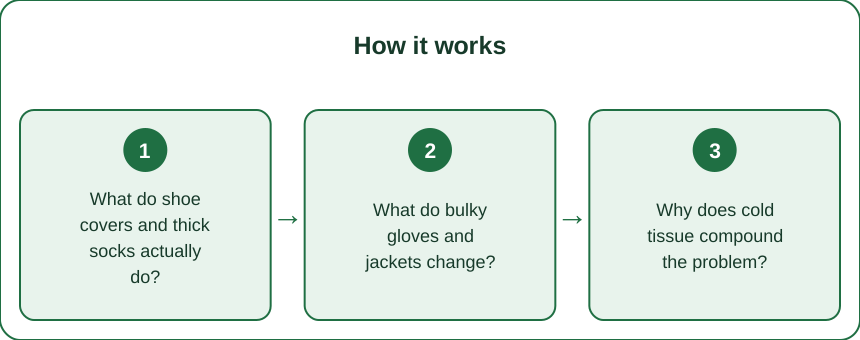
What do shoe covers and thick socks actually do?
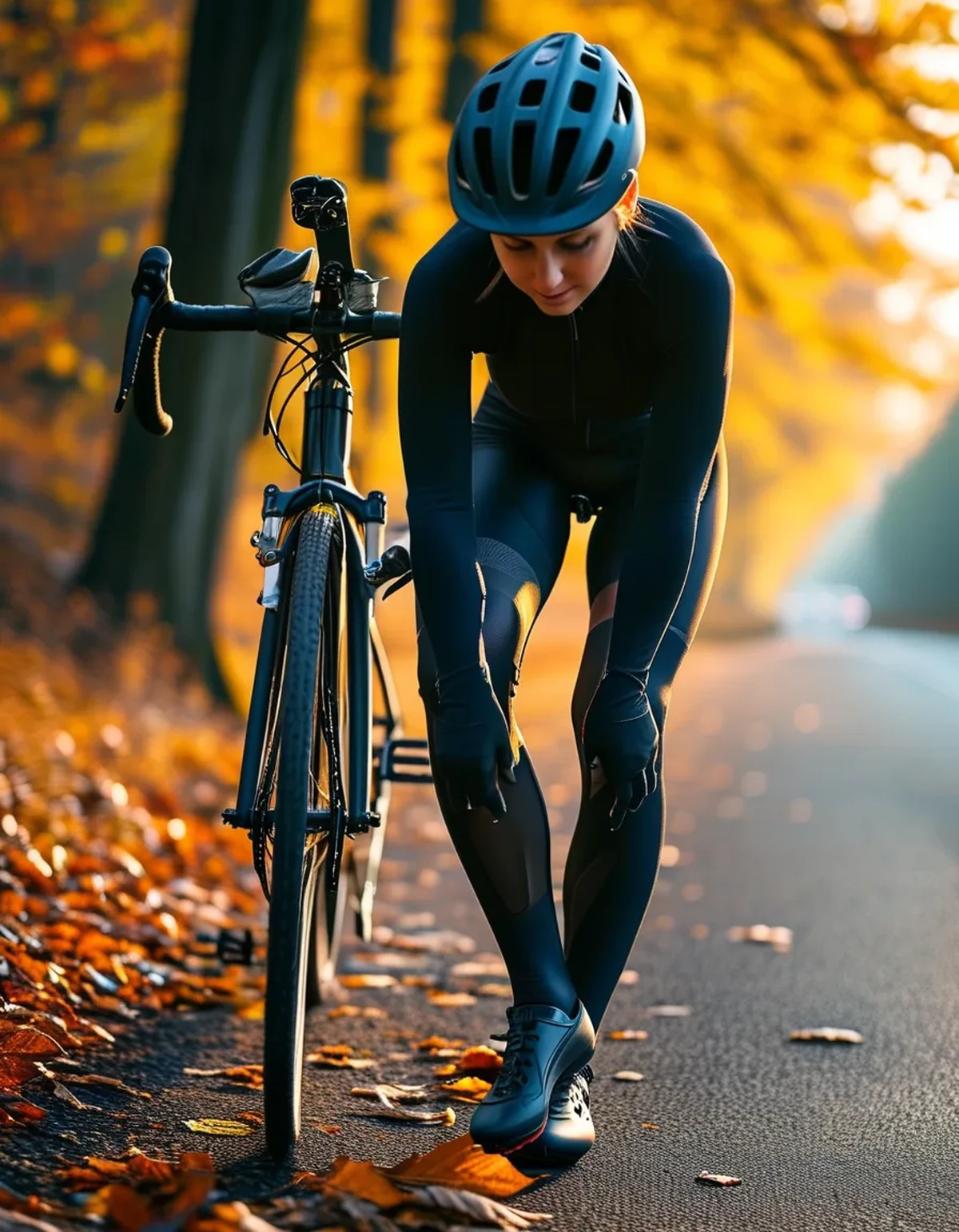
They raise the foot relative to the pedal, and even a few millimetres has a measurable effect on knee extension at the bottom of the stroke.
A thick sock plus a neoprene overshoe can add four to eight millimetres, which is well beyond the range most fitters consider a meaningful saddle height change.
Excessive effective saddle height produces posterior knee discomfort and hip rocking, which is exactly the complaint pattern that appears in autumn.
It also changes cleat position slightly, since the foot sits differently inside a shoe stuffed with a thicker sock.
Winter shoes are usually a size larger than summer shoes, which moves the cleat relative to the foot again.
And the practical fix is a small saddle height reduction for the winter setup - two to four millimetres is usually enough, and it is worth marking both positions on the seatpost so the change takes ten seconds.
What do bulky gloves and jackets change?
Thick gloves increase the effective distance from your shoulder to the bar, which slightly lengthens your reach and shifts weight onto the hands.
Grip diameter increases, which changes hand position, increases forearm tension, and contributes to hand numbness that people usually blame on bar tape or gloves being too tight.
Brake lever reach becomes harder with thick gloves, particularly for smaller hands, and riders compensate by moving forward on the bars or riding on the hoods differently.
Torso layers restrict flexion at the hip and thoracic spine, which reduces how far forward you can comfortably rotate the pelvis.
The pelvis rotates back to compensate, which changes saddle pressure distribution and is a common cause of autumn saddle discomfort that has nothing to do with the saddle.
And a jacket over layers is a large aerodynamic and postural change, so the position that felt efficient in a jersey feels cramped and inefficient in a winter kit.
Why does cold tissue compound the problem?
Cold muscle and connective tissue have reduced compliance, so available range of motion at the hip, hamstring, and lower back is genuinely lower.
A position at the limit of your summer flexibility is beyond your winter flexibility, without anything about the bike having changed.
Warm-ups need to be longer, and most people shorten them in autumn because standing around in the cold is unpleasant.
Cold hands grip harder - the same mechanism that affects any manual task - which increases upper body tension and shoulder and neck load.
Reduced peripheral circulation makes hand and foot numbness far more likely at a position that was fine in summer.
And power output drops in the cold, which changes cadence and pedalling dynamics, which subtly changes the loading on the whole position.
What Nobody Tells You About Seasonal Fit
Mark two saddle heights on your seatpost. A summer mark and a winter mark, with the winter position two to four millimetres lower, converts a fit problem into a ten-second adjustment.
Knee pain in October is more often footwear than fitness. Riders assume they have lost condition or developed a problem when they have raised their effective saddle height by adding an overshoe.
A slightly shorter stem or a higher bar for winter is a legitimate setup, not a compromise. Many riders run a genuinely different winter position and ride better for it.
Winter bikes should be fitted in winter clothing, which sounds obvious and is almost never done - fits are booked in comfortable weather in minimal kit.
Grip diameter changes with gloves enough to affect nerve compression, so bar tape thickness is a variable worth adjusting seasonally rather than a fixed preference.
And indoor training in minimal clothing means your indoor and outdoor positions genuinely differ in autumn - which is worth knowing before you conclude that outdoor riding has become uncomfortable. This is general information, not medical advice.
How should you set up the seasonal transition?
Do it before the weather forces it, on a warm day when you can compare positions rather than mid-ride in the cold.
Change one thing at a time, starting with saddle height, and ride a few times before adjusting anything else.
Measure and record both positions - saddle height, setback, and bar drop - so the switch back in spring is equally quick.
Ride in the full winter kit when you assess it, including the gloves and overshoes you will actually use.
Extend the warm-up by five to ten minutes in cold conditions, and expect the first fifteen minutes to feel worse than the rest of the ride.
And if discomfort persists after the clothing-adjusted fit, get a professional fit in winter kit rather than continuing to guess. Persistent knee, back, or nerve symptoms warrant assessment rather than incremental adjustment. This is general information, not medical advice.
FAQ: Autumn Bike Fit, Answered
How much should I lower my saddle for winter?
Typically two to four millimetres, matched to the thickness added by your winter socks and overshoes. Mark both positions on the post.
Why does my knee hurt only in autumn?
Usually raised effective saddle height from thicker footwear, combined with cold tissue having less range. It is a clothing change, not a fitness change.
Do gloves really affect my fit?
Yes - they increase effective reach and grip diameter, which shifts hand position and contributes to numbness and forearm tension.
Should I get a professional fit in winter kit?
If you ride seriously through winter, yes. Fits done in minimal summer clothing do not describe your winter position.
Why is my saddle suddenly uncomfortable?
Torso layers restrict hip and thoracic flexion, so the pelvis rotates back and pressure distribution changes. The saddle did not change; your pelvic angle did.
How long should my warm-up be in the cold?
Five to ten minutes longer than in summer, and expect the first fifteen minutes to feel worse than the rest. This is general information, not medical advice.
TL;DR:
- Thick socks and overshoes raise your foot four to eight millimetres, which is functionally a saddle height increase and the usual cause of autumn knee pain.
- Bulky gloves increase effective reach and grip diameter, contributing to hand numbness and forearm tension.
- Torso layers restrict hip and thoracic flexion, rotating the pelvis back and changing saddle pressure - the saddle is rarely the problem.
- Cold tissue has genuinely less range, so a position at the edge of summer flexibility is past the edge in October.
- Mark a summer and a winter saddle height on the post, change one variable at a time, and add five to ten minutes to the warm-up.
If you ride seriously through winter, get fitted in the kit you actually wear. This is general information, not medical advice.
Keep Reading
This article is for general informational and styling purposes only. Fit, sizing, and product availability may vary — check current details before purchasing.