The Complete Guide to Cycling Into Fall: Layering, Light, and the Cold-Start Problem
Quick Answer: Autumn cycling is a management problem, not a fitness one. Dress to be slightly cold in the first ten minutes, protect the four areas that fail first (hands, feet, ears, knees), plan for the ride ending in less light than it started with, and treat wet leaves and low sun as the season’s two real hazards. Everything else is a variation on those four points.
Summer riding has one variable: how hot it is. Autumn riding has six, and they interact.
You leave in 48-degree air and finish in 70. You climb and overheat, then descend and freeze. The sun sits at eye level for the whole return leg. There are leaves on every corner and the light runs out an hour earlier than it did three weeks ago.
None of this is difficult once you have a system. What makes autumn hard is riding it with a summer system and improvising. Here is the full version.
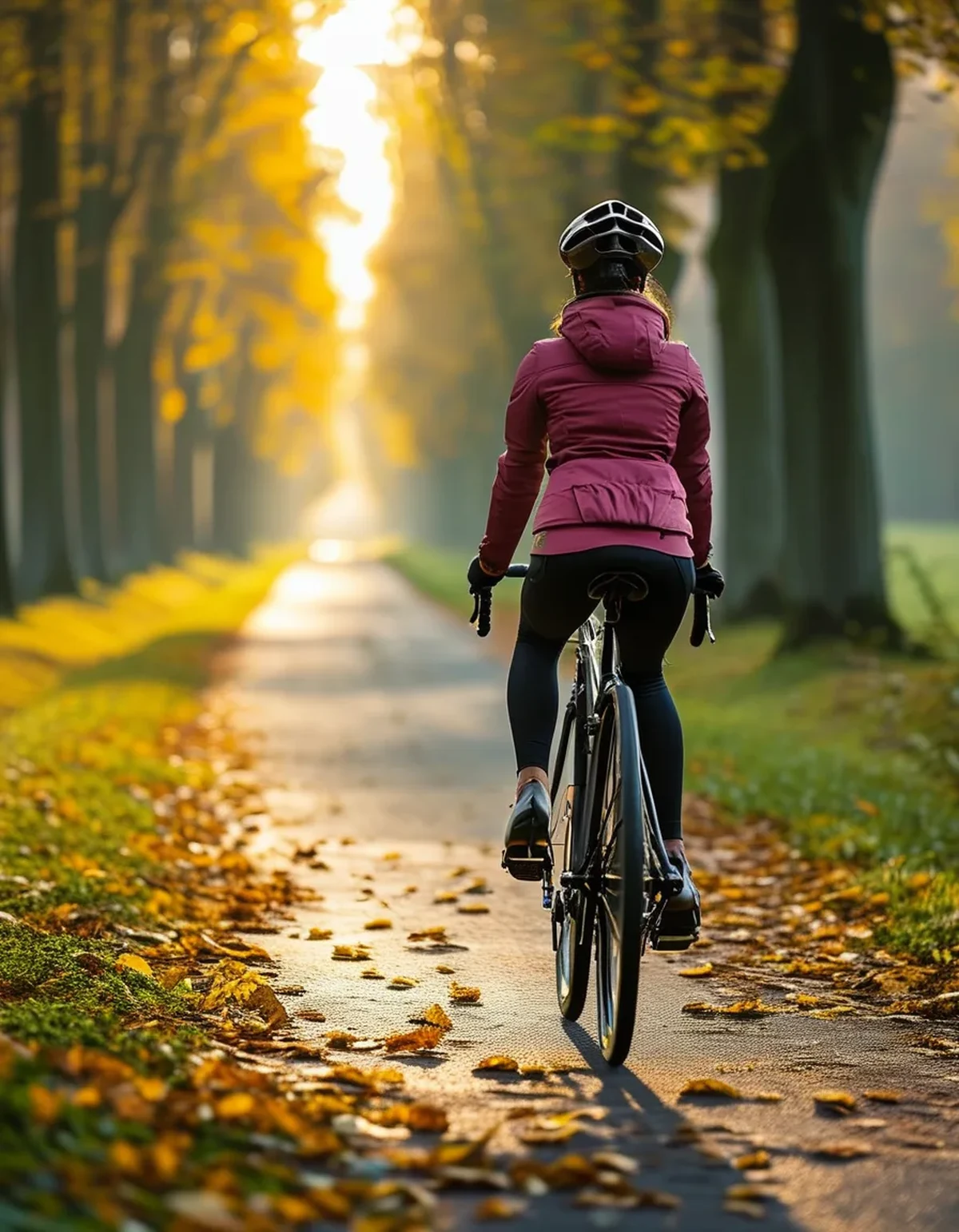
How to layer for autumn riding, by actual temperature
The core principle is one most people resist: you should be slightly cold for the first ten minutes. If you are comfortable at the moment you roll out, you will be overheated within two miles, and sweat-soaked clothing in autumn is how a pleasant ride turns miserable on the way home.
A working temperature guide, assuming moderate effort on flat to rolling terrain:
- 65°F and up: Summer kit. Maybe arm warmers you will take off.
- 58-65°F: Short-sleeve jersey, arm warmers, light gloves. Bib shorts. A packable gilet in the pocket.
- 50-58°F: Long-sleeve base layer, jersey, gilet or light jacket, full-finger gloves, knee warmers. This is the range most autumn rides live in and the one worth getting exactly right.
- 42-50°F: Thermal base layer, long-sleeve jersey, windproof jacket, thermal bib tights or leg warmers, insulated gloves, ear cover, shoe covers.
- Below 42°F: Everything above plus a proper winter jacket, thicker gloves, and serious foot protection. Toe covers stop being sufficient here.
The structure matters as much as the numbers. Base layer wicks, mid layer insulates, outer layer blocks wind. Skipping the base layer is the most common autumn mistake — a jersey against skin holds sweat, and wet fabric against skin at 50°F with wind chill from riding is genuinely cold.
Two more principles. Everything you add should be removable while riding, which is why arm warmers, knee warmers, gilets, and full-zip jerseys dominate autumn kit lists — they come off without stopping and fit in a pocket. And wind is the variable, not temperature. A 55-degree day with 15 mph wind demands the 48-degree kit. Riding at 18 mph into a 12 mph headwind produces an effective wind chill far below the forecast.
The cold start, and why the first ten minutes ruin rides
The cold-start problem deserves its own treatment because it causes more autumn discomfort than anything else.
At the start of a ride your muscles are cool, your peripheral circulation is constricted, and you are producing very little heat. Twenty minutes later you are producing a great deal of heat and your body is dumping it through skin blood flow and sweat. The kit that is right for minute five is badly wrong for minute thirty, and vice versa.
Three approaches, in increasing order of effectiveness:
Warm up indoors before you leave. Five minutes of easy spinning on a trainer, or even ten squats and some arm swings, raises core temperature enough that you can dress for the ride rather than for the start. This is the single most effective fix and almost nobody does it.
Start into the wind and into the cold. Ride out on the exposed, cold side and come home on the sheltered, warmer side. Also gives you the tailwind when you are tired.
Accept ten minutes of discomfort. Dress for minute thirty and be honestly cold at the start. It works, it is free, and it requires believing that you will warm up — which you will, every time.
The corollary is the descent problem. You climb producing enormous heat and then descend producing almost none, at high speed, in wet clothing. This is where autumn rides go badly wrong. Before a long descent, zip up completely, put the gilet back on, and pull the gloves on. Do it at the top, not partway down when your hands are already too cold to manage a zip.
Protecting the four areas that fail first
Your core will be fine. These four will not, and each has a specific solution.
Hands. They fail first, and cold hands are a safety issue — braking and shifting both degrade. Full-finger gloves from about 55°F, insulated below 48°F. The mistake is gloves that are too thick and too tight, which restricts circulation and makes hands colder. If your fingers go numb in properly-rated gloves, check that your gloves are not compressing and that your bar grip is not a death grip. Split-finger lobster gloves outperform regular gloves below 40°F by a large margin.
Feet. Cycling shoes are ventilated by design, and 20 mph of airflow through mesh at 45°F is brutal. Toe covers handle the 45-55°F range; full shoe covers below that. Merino socks beat cotton comprehensively. A useful trick: a strip of foil or a plastic bag over the top of the foot inside the shoe blocks airflow and costs nothing.
Ears. A thin skullcap or headband under the helmet is one of the highest-comfort-per-gram items in cycling. Ears are exposed, thinly insulated, and directly in the airflow. Wind noise also drops dramatically, which improves your ability to hear traffic.
Knees. The rule most experienced riders follow: cover your knees below 60°F. Cold joints and cold connective tissue are associated with more discomfort and slower warm-up, and knee warmers are the cheapest insurance in cycling. They roll down to the ankles if you overheat.
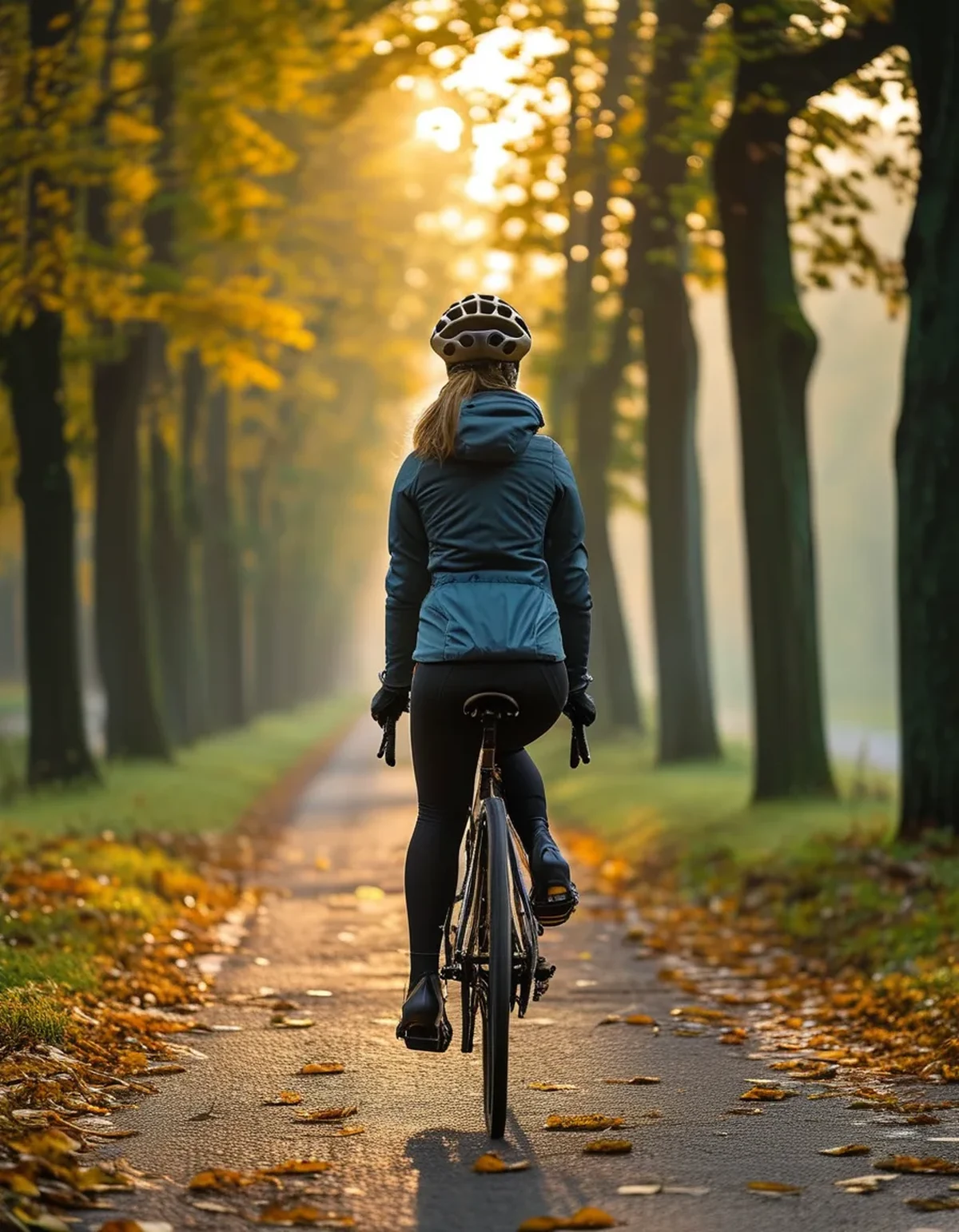
Riding in low sun and shrinking daylight
The light situation changes faster than most riders account for, in two distinct ways.
Low sun angle. In autumn the sun sits much lower for much of the day, which means it spends hours directly in your eyes and, more dangerously, directly in drivers’ eyes. A driver looking west at 5pm in October may genuinely not see you.
- Ride with the sun behind you where you can. Plan out-and-back routes so the low-sun leg happens early.
- Clear or yellow lenses, not dark ones. Dark lenses hurt in the shade under trees, and autumn routes alternate between glare and deep shadow every few hundred meters.
- Assume you are invisible in backlit conditions. A rider silhouetted against a low sun is close to unseeable. Ride defensively at junctions during the golden hours.
Shrinking daylight. You are losing several minutes a day, and it compounds. The route that finished in comfortable light in early September finishes in dusk by early October.
- Run lights on every ride, day or night. A daytime running light meaningfully improves how early drivers see you, and it means you are never caught out.
- Check your battery before, not during. Cold reduces battery capacity — expect noticeably less runtime than the rated figure at 40°F.
- Set a turnaround time, not a turnaround distance. Sunset minus a fixed margin. Distance goals are how people end up on unlit roads.
Reflective on moving parts. Reflective material on ankles and feet is far more visible to drivers than reflective on a jacket, because motion is what the eye catches.
Wet leaves, road grit, and autumn surface hazards
Autumn roads behave differently, and the changes are not obvious until you are already sliding.
Wet leaves are the season’s headline hazard. A leaf mat over asphalt is genuinely slick, and worse, it hides what is underneath — potholes, drain covers, gravel. The specific danger is leaves in a corner, where you are already at a lean angle.
- Brake before the corner, not in it. Standard advice that becomes essential here.
- Reduce lean angle and take a straighter line through leaf-covered corners, even if it means a wider entry.
- No sudden inputs. Braking, steering, and pedaling forces should all be applied smoothly.
Painted lines and metal are worse than usual. Wet paint, manhole covers, and railway crossings all offer very little grip in the wet, and autumn is wet.
Road grit and debris increase. Autumn storms bring down branches and wash grit into the road edge — exactly where you ride. Puncture rates go up noticeably in autumn. It is a good time to fit a more puncture-resistant tire and to drop your pressure slightly for a larger contact patch and better compliance.
Your bike takes more abuse. Wet roads mean chain contamination, brake wear, and corrosion. Wipe and re-lube the chain more often — every couple of wet rides rather than every few weeks — and use a wet-weather lube. Fenders are transformative in autumn and are the most underrated purchase a rider makes.
Fueling, hydration, and the invisible autumn errors
Two things quietly change and almost everyone gets them wrong.
You still need to drink, and you will not feel like it. Thirst signaling drops substantially in cool weather even though sweat losses remain significant, especially under layers that trap humidity. Dehydration in autumn is common precisely because it does not feel like a hot day. Set a schedule rather than relying on thirst — a few mouthfuls every 15 minutes.
Your energy demand goes up, not down. Cold weather raises metabolic cost; keeping warm has a price. Rides that needed one gel in July may need two in October. Cold also blunts appetite during the ride, so the bonk arrives without the usual warning.
- Eat on a timer. Something every 45 minutes on rides over 90 minutes, whether you feel like it or not.
- Choose foods that stay edible when cold. Gels get thick and unpleasant in the cold; bars can become genuinely difficult to chew. Keep food in an inner pocket where body heat reaches it.
- Carry an extra layer you have not planned to use. A packable gilet weighs almost nothing and turns a mechanical stop in 45-degree weather from dangerous into merely annoying.
Post-ride matters more now. Changing out of wet kit immediately is not fussiness — standing around in soaked clothing in cool air is where most riders actually get chilled. Have dry clothes in the car, and start with the base layer.
FAQ: Autumn Cycling Questions, Answered
How do I stop my hands going numb even in warm gloves?
Numbness in adequately warm gloves usually is not a temperature problem. Check three things: gloves that are too tight restrict circulation and make hands colder; a heavy grip on the bars compresses the ulnar nerve; and cold core temperature causes your body to shut down peripheral blood flow to protect the core. That last one is the most common — add a layer to your torso and your hands often warm up without touching the gloves.
Are fenders really worth it?
Yes, and it is not close. A rear fender keeps your back and shorts dry, a front fender keeps your feet dry, and dry is warm. They also protect your drivetrain from the road spray that causes most autumn wear. If you ride through autumn at all, fenders are the highest-value upgrade available and cost less than a pair of good gloves.
Should I ride less in the autumn or push through?
Autumn is genuinely one of the best riding seasons — stable temperatures, quiet roads, good light. The riders who lose fitness over autumn usually lose it to logistics rather than weather: less daylight after work, a bike that is unpleasant to ride in the wet. Fix the logistics — lights, fenders, a kit that works, a route that fits the light — and the season takes care of itself.
When should I switch to the indoor trainer?
Ice is the real line, not temperature or rain. Riding at 35°F in good kit is entirely pleasant; riding on black ice is not, and no kit fixes it. Many riders use the trainer for hard interval sessions once the daylight window closes and save outdoor riding for weekend daylight hours — a split that preserves both fitness and enjoyment.
TL;DR:
- Dress to be slightly cold for the first ten minutes; if you are comfortable at the start you will be soaked by mile three.
- Base layer wicks, mid layer insulates, outer layer blocks wind — and everything should come off while riding.
- Protect hands, feet, ears, and knees specifically; cover knees below 60°F and expect hands to fail first.
- Zip up and glove up at the top of a descent, not partway down.
- Run lights every ride, set a turnaround time off sunset, and plan the low-sun leg for early in the ride.
- Treat wet leaves and painted lines as genuinely slick; brake before corners and make no sudden inputs.
- Drink on a schedule and eat on a timer — thirst and appetite both lie to you in cool weather.
Autumn rewards preparation more than any other season. Get the kit and the light window right once, and you get some of the best riding of the year on empty roads.
Keep Reading
This article is for general informational and styling purposes only. Fit, sizing, and product availability may vary — check current details before purchasing.