Complete Guide: Why Your Hands Go Numb on the Bike - and the Fix Order That Works
Quick Answer: Numb hands on a bike are almost always nerve compression, not circulation. Which fingers go numb tells you which nerve: ring and little fingers point to the ulnar nerve at the outside of the palm, while thumb, index, and middle fingers point to the median nerve at the base of the palm. The fix order that actually works: reduce weight on the hands first (saddle tilt and fore-aft position), then change hand position and bar angle, and only then look at gloves and bar tape. Most people do that list backwards and buy padding that makes the compression worse.
Numbness is a signal worth taking seriously. Persistent compression can take weeks or months to resolve once it becomes established.
This guide works through the causes in the order they should be addressed, with the diagnostic questions that tell you where you are.

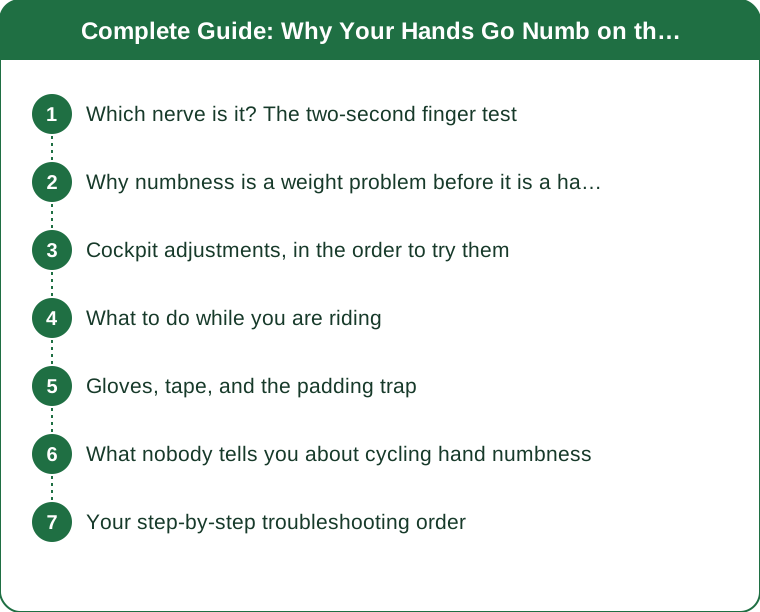
Which nerve is it? The two-second finger test
Before changing anything, work out which nerve is being compressed. The pattern of numbness maps almost perfectly onto two distinct problems with two different fixes, and treating the wrong one is why so many riders make repeated adjustments without improvement.
Ring and little finger numbness - the ulnar nerve. This is by far the most common in cycling, so common that the classic presentation has long been described in the sports medicine literature as handlebar palsy. The ulnar nerve passes through a narrow channel on the little-finger side of the wrist, and that channel sits precisely where most riders rest weight on the outside of the palm. Symptoms often include weakness in grip and difficulty spreading the fingers, alongside the numbness.
Thumb, index, and middle finger numbness - the median nerve. This is the same nerve involved in carpal tunnel syndrome, and it is compressed at the base of the palm near the center. Riders who ride with cocked-back wrists get this version, because wrist extension narrows the tunnel significantly.
Both at once usually means the problem is load rather than position - too much body weight going through the hands regardless of where they sit.
Numbness across the whole hand with color change, coldness, or symptoms that persist off the bike is a different picture and worth a medical opinion rather than a bike fit. This is general information, not medical advice.
Why this matters so much: the ulnar fix is about where the outside edge of the palm sits and how much weight lands on it. The median fix is about wrist angle. A change that helps one can worsen the other, which is exactly what happens when riders rotate the bars without knowing which problem they have. Write down which fingers, on which hand, and after how long. That single note directs everything below.
Why numbness is a weight problem before it is a hand problem
Here is the part that gets skipped: the hands are numb because too much of your body weight is resting on them, and the reason is almost never the handlebars.
On a well-balanced bike, your weight is distributed between the saddle, the pedals, and the hands, with the hands carrying the smallest share. When something pushes weight forward, the hands absorb it - and no amount of padding changes how many pounds are pressing on a nerve.
The most common culprit is saddle tilt. A saddle nosed down even a couple of degrees causes you to slide forward continuously, and you brace against that slide with your arms. Riders often tilt the saddle down to relieve soft-tissue pressure and then develop numb hands within a few rides. If your hands went numb around the same time you tilted the saddle, you have found it. Level is the starting point; measure with a phone level app on the flattest part of the saddle rather than by eye.
Second: saddle fore-aft position. A saddle too far forward moves your center of mass over the bars. Fore-aft is a balance adjustment, not a reach adjustment - many riders slide the saddle forward to make the bars feel closer, which trades a reach problem for a hand problem.
Third: saddle height. Too high and you rock and reach; too low and you sit heavily forward. Either extreme shifts load onto the hands.
The self-test: riding on flat ground at a steady pace, briefly lift both hands an inch off the bars. If you can do that without your torso dropping, your weight distribution is roughly right. If you immediately pitch forward, your hands were holding you up - and that is your entire problem, regardless of what gloves you own.
Fix this layer first. Riders who address saddle position frequently find the numbness resolves before they ever touch the front end.
Cockpit adjustments, in the order to try them
Once weight distribution is sane, the front end determines where the remaining pressure lands.
Bar height. Raising the bars is the single most effective front-end change for hand numbness. Every centimeter of drop increases the forward lean and the weight on the hands. On a bike with a threadless stem, moving a spacer below the stem takes ten minutes. On many bikes, flipping the stem to a positive angle gains another few centimeters at no cost. Riders chasing a low, aggressive position frequently need more flexibility than they have - and the hands pay for the gap.
Reach. Too long and you lock the elbows and lean on the hands. A shorter stem is a common and cheap fix, and 10 mm makes a noticeable difference. The test: at your normal riding position, your elbows should be softly bent. Locked elbows transmit every bump directly into the nerve and remove your only suspension.
Bar rotation and lever position. On drop bars, the flat top of the drop should be roughly horizontal or angled very slightly down, with the hoods positioned so the transition from bar to hood is smooth and level. A hood that tips your wrist backward compresses the median nerve on every ride. Aim for a straight line through forearm, wrist, and hand.
Bar width. Bars narrower than your shoulders roll the wrists inward; too wide splays the elbows. Match roughly to your shoulder width, measured between the bony points at the front of the shoulder.
Bar shape. Flat bars with no sweep force the wrist into an unnatural angle. A bar with 10-15 degrees of backsweep puts the wrist in a neutral position and resolves a surprising number of median-nerve cases on hybrid and mountain bikes alone.
Make one change at a time and ride at least two sessions before judging. Changing three things at once means learning nothing.

What to do while you are riding
Position fixes the cause. Riding habits determine whether an imperfect position still ruins your hands.
Change hand position every 5-10 minutes, deliberately. This is the single most valuable habit and the one most riders neglect. Compression damage is a function of pressure multiplied by time, so a position that would be fine for eight minutes becomes a problem at forty. Drop bars offer tops, hoods, and drops; flat bars need bar ends added to create a second option. A bike with only one possible hand position is a bike that will eventually make your hands numb, no matter how it is set up.
Keep the elbows bent and soft. Think of your arms as suspension. Locked elbows deliver road vibration straight to the nerve and add nothing but fatigue. On rough pavement, unweight the hands slightly by taking more load through the legs and core.
Grip lightly. A death grip does two harmful things: it tenses the forearm muscles around the nerve channels and it stops you from making micro-adjustments. You need enough grip to control the bike and no more.
Do not rest on the outside heel of the palm. That is exactly where the ulnar nerve runs. Spread the load across the whole palm, or shift toward the thumb side.
Stand up for ten seconds every few minutes on longer rides. It fully unloads the hands and resets the pressure.
And use the early warning. Tingling is the first stage; full numbness is later. Change position at tingling and it resolves in under a minute. Ride through it for another twenty minutes and it can persist for hours after you stop - and repeated episodes are what turn a ride-day annoyance into a weeks-long problem.
Gloves, tape, and the padding trap
This is where most riders start, and it is the least effective place to begin - but done right, it does help.
More padding is not better. Thick gel padding compresses under load and then bulges into exactly the channels where the nerves run. Padding concentrated in the wrong place actively increases nerve pressure. Riders who upgrade to heavily padded gloves and get worse are experiencing precisely this.
What to look for instead: padding placed to bridge the nerve rather than press on it. Better gloves place material on either side of the ulnar channel, leaving relief where the nerve sits. Some designs have a visible cutout or channel. The goal is pressure distribution, not cushioning.
Fit matters more than thickness. A glove that bunches creates pressure points, and a tight glove restricts circulation at the wrist. Bunching across the palm is worse than no glove at all.
Bar tape does real work on vibration. Double-wrapping the tops, or using a thicker tape, meaningfully reduces the high-frequency buzz that contributes to nerve irritation over hours. This is a genuine improvement and it is cheap.
Tire pressure is the underrated one. Many riders run substantially more pressure than they need. Dropping pressure by 10-15 psi, within your tire’s safe range, reduces road vibration more than any glove can - and wider tires at lower pressure are more comfortable without being slower on real roads.
And grip diameter. A grip that is too thin makes you squeeze harder. Slightly thicker grips or an extra tape layer reduces grip force, which reduces forearm tension, which reduces nerve compression. It is a chain, and it starts at the contact point.
What nobody tells you about cycling hand numbness
Five things that change how seriously to take it and how to plan around it.
Recovery is slow and asymmetric. A nerve that has been compressed for a few hours may take days to feel normal. One that has been repeatedly compressed over a season can take weeks or months, and it is common for weakness to outlast the numbness. If you have grip weakness rather than just tingling, stop riding that position immediately and get it assessed. This is general information, not medical advice.
It is more common in women’s hands for structural reasons. Smaller hands on standard-diameter bars mean a smaller contact area carrying the same load, so pressure per square inch is higher. Narrower bars, smaller-diameter grips, and shorter-reach levers are genuine fixes, not accommodations - and short-reach levers in particular let smaller hands brake from the hoods without stretching the wrist.
Core strength shows up in your hands. A rider whose torso is supported by the trunk carries less weight through the arms. When the core fatigues late in a long ride, weight migrates to the hands - which is why numbness so often appears at a predictable distance rather than at a predictable position.
Fall riding makes it worse in two ways. Thicker gloves add bulk that changes the grip and can bunch, and cold hands are already less sensitive, which means you notice compression later - after more damage has accumulated. Size winter gloves so they do not squeeze, and check hand position more often, not less.
Indoor training is the good news. On a trainer you can change position freely, stop instantly, and experiment with saddle tilt in one-degree increments without traffic. The fall indoor season is the best possible time to actually solve this rather than manage it for another year.
Your step-by-step troubleshooting order
Work through this in sequence. Do not skip to step four, which is where most people begin and most people stay stuck.
Step 1 - Identify the nerve. Ring and little finger means ulnar; thumb, index, middle means median; both means load. Write down the finger pattern, which hand, and the distance or time at which it starts.
Step 2 - Fix the weight distribution. Level the saddle with a phone level app. Check fore-aft. Do the hands-off test on flat ground. If you cannot briefly ride hands-off without pitching forward, do not change anything else until you can. Ride twice, then re-evaluate.
Step 3 - Raise the bars. Add a spacer below the stem or flip the stem upward. Try 10-20 mm and ride twice before judging. This step alone resolves a large share of cases.
Step 4 - Adjust reach and wrist angle. Shorten the stem by 10 mm if your elbows lock. Rotate the bars or reposition the levers so the forearm-wrist-hand line is straight. On flat bars, consider a swept bar or add bar ends so a second hand position exists.
Step 5 - Reduce vibration. Drop tire pressure 10 psi within the safe range, double-wrap the tops, or fit slightly wider tires.
Step 6 - Address gloves last. Choose relief-channel padding over thick gel. Check for bunching. If a padded glove makes it worse, believe the glove and remove it.
Step 7 - Build the habits. Change hand position every 5-10 minutes, keep elbows soft, grip lightly, and react at the first tingle rather than at numbness.
If you have worked through all seven and the numbness persists, a professional bike fit is worth the money - and if there is any weakness, see a doctor before spending it on parts.
TL;DR:
- Numbness is nerve compression, not circulation. Ring and little finger means ulnar; thumb and index means median.
- Fix weight distribution first - a nose-down saddle is the single most common cause, and no glove compensates for it.
- Raise the bars before you shorten anything. Every centimeter of drop adds weight to your hands.
- Change hand position every 5-10 minutes and keep the elbows soft; compression is pressure multiplied by time.
- Thicker padding often makes it worse. Look for relief channels, and drop tire pressure for real vibration reduction.
- Act at the first tingle, and take grip weakness seriously - nerves recover slowly once damage accumulates.
Start with the saddle level and the hands-off test this weekend. It costs nothing, takes five minutes, and it is the step that makes every later adjustment actually work.
Keep Reading
This article is for general informational and styling purposes only. Fit, sizing, and product availability may vary — check current details before purchasing.