Cycling Cadence, Fully Explained: What It Is, Why It Matters, and How to Train It
Quick Answer: Cadence is your pedaling speed in revolutions per minute (RPM). Most recreational cyclists benefit from targeting 80-90 RPM for efficiency and reduced joint stress, adjusting up for climbs recovery spinning and down slightly for short power efforts — but the ideal number varies by fitness level, terrain, and goal.
Understanding cadence properly changes almost every other part of how you ride, from gear choice to fatigue management to injury prevention, which is why it’s worth a genuinely thorough explanation rather than a single tip.
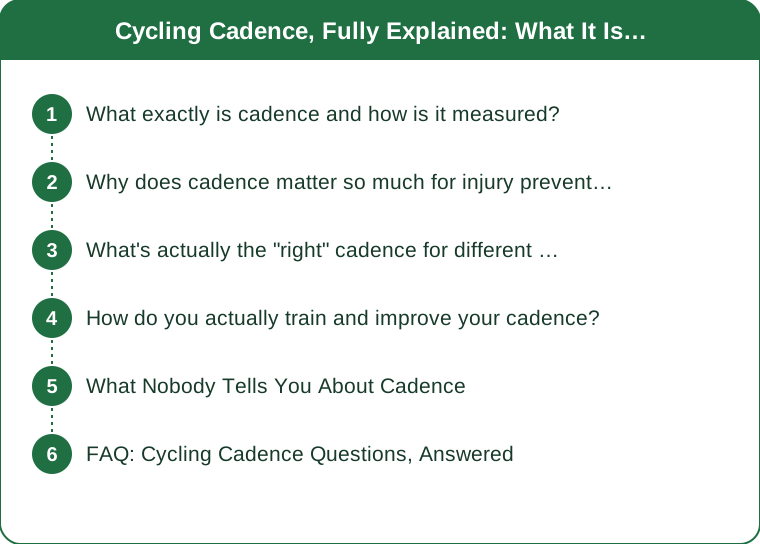
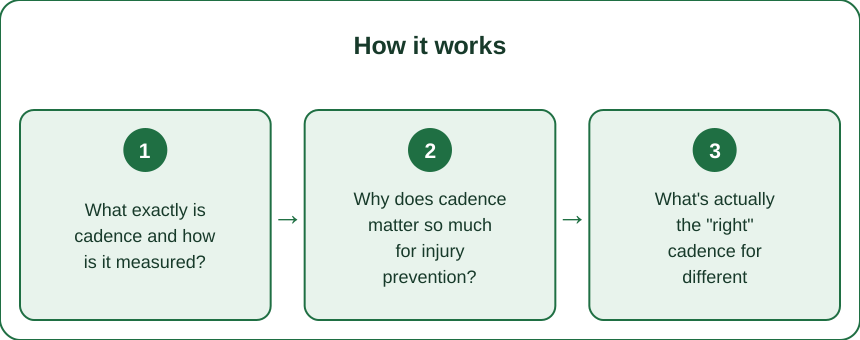
What exactly is cadence and how is it measured?
Cadence is simply how many times your pedals complete a full revolution per minute, measured in RPM. Most bike computers and cycling apps track it automatically via a cadence sensor on the crank, though experienced riders can estimate it reasonably well just by feel after enough practice.
It’s distinct from speed — you can maintain the same cadence across different gears and produce very different speeds, which is exactly why gear selection and cadence work together rather than being the same thing.
Why does cadence matter so much for injury prevention?
Low cadence (below roughly 60 RPM) means pushing harder against more resistance per pedal stroke, which places significantly more mechanical stress on the knees over the course of a ride — this is one of the most common, preventable causes of cyclist knee pain. Higher cadence distributes that same power output across more, lighter strokes, reducing peak joint load per revolution.
This is why coaches so consistently push new cyclists toward higher cadence early — it’s less about immediate performance and more about building a sustainable, lower-injury-risk pedaling pattern from the start.
What’s actually the “right” cadence for different situations?
Flat, steady endurance riding: 80-90 RPM is the widely cited efficient range for most recreational and intermediate riders, balancing cardiovascular load against muscular fatigue well. Climbing: cadence often naturally drops to 60-75 RPM under load, which is normal — forcing an artificially high cadence uphill against steep resistance can be less efficient than settling into a sustainable, slightly lower rhythm.
Recovery or easy spin days: a higher, lighter cadence (90-100+ RPM) at low resistance promotes blood flow and recovery without adding muscular strain — this is the classic “spin the legs out” recovery approach experienced cyclists use between harder efforts.

How do you actually train and improve your cadence?
High-cadence drills: spend 5-10 minute blocks at 95-100+ RPM in an easy gear, focusing on smooth, circular pedal stroke rather than mashing — this builds neuromuscular coordination for efficient high-RPM pedaling. Single-leg drills (on a trainer, pedaling with one leg at a time briefly) expose and correct dead spots in your pedal stroke that limit smooth cadence at any speed.
Over 6-8 weeks of consistent cadence-focused training, most cyclists see their comfortable natural cadence rise measurably, along with reduced knee strain and often improved overall efficiency at a given power output — a genuinely trainable skill, not a fixed trait.
What Nobody Tells You About Cadence
New cyclists often default to a naturally low cadence (50-65 RPM) simply because it feels more powerful and controlled, mimicking a walking or running stride pattern they’re used to — but this instinct actually works against long-term joint health and efficiency on a bike. It takes deliberate practice to override that instinct toward a higher, smoother cadence.
Also underrated: gear selection is the actual lever for cadence control, not effort level. Many riders instinctively push harder in a tall gear rather than shifting down and spinning faster — learning to shift proactively, before terrain changes, is a bigger skill upgrade than most riders expect.
FAQ: Cycling Cadence Questions, Answered
What cadence do professional cyclists typically ride at?
Many pros average 90-100+ RPM on flats and even maintain relatively high cadence on climbs, reflecting years of neuromuscular conditioning most recreational riders haven’t built yet — it’s not a fair direct comparison target for beginners.
Is a cadence sensor worth buying for casual riders?
If you’re specifically working on improving cadence or preventing knee strain, a sensor provides objective feedback that’s hard to replicate by feel alone — worthwhile for a dedicated few weeks of focused training even if you don’t keep it long-term.
Can cadence training help with speed, not just comfort?
Yes — a more efficient, higher cadence typically allows sustained higher power output over long rides with less fatigue accumulation, which does translate to real speed gains over time, not just comfort.
TL;DR:
- Cadence is pedaling RPM — 80-90 is the efficient range for most flat, steady riding
- Low cadence increases knee stress per stroke; higher cadence distributes load more safely
- Climbing naturally lowers cadence, recovery spins raise it — both are normal, not wrong
- Cadence is trainable through drills and improves measurably within 6-8 weeks of focus
Keep Reading
This article is for general informational and styling purposes only. Fit, sizing, and product availability may vary — check current details before purchasing.