Cycling for Beginners: The Complete Guide to Getting Started Without Overspending or Overtraining
Quick Answer: Start with a properly fitted bike (even a budget one), build ride time gradually over 4-6 weeks rather than distance, and prioritize saddle comfort and gearing basics before anything else — most beginner dropout comes from discomfort and overreach in week one, not lack of fitness.
Cycling looks simple from the outside: get on, pedal. In practice, the beginners who stick with it long-term and the ones who quit after two rides are usually separated by a handful of specific, fixable decisions made in the first month. This guide walks through all of them.

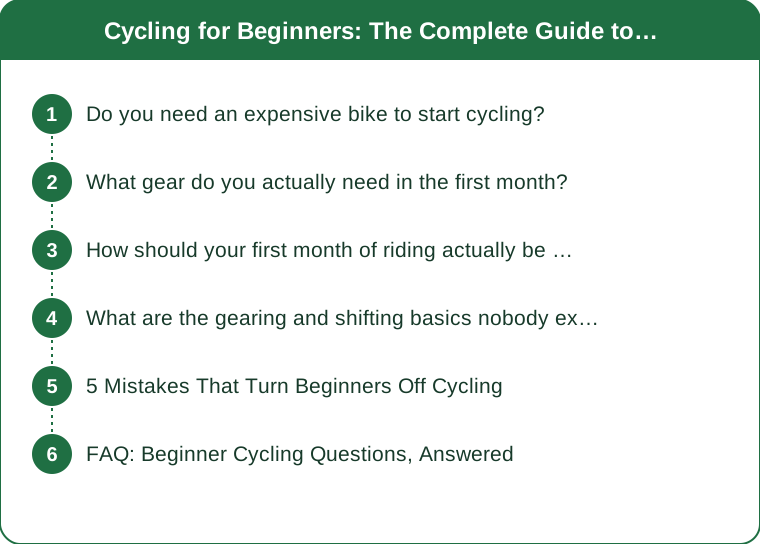
Do you need an expensive bike to start cycling?
No. A properly fitted, well-maintained budget or used bike outperforms an expensive bike that doesn’t fit. Fit determines whether cycling feels good far more than price point does.
What actually matters: correct frame size for your height, saddle height that allows a slight bend in the knee at the bottom of the pedal stroke, and handlebars positioned so you’re not hunching or overreaching. A bike shop fitting (often free or low-cost with a purchase) solves 80% of beginner discomfort before you’ve ridden a mile.
If you’re borrowing or buying secondhand, at minimum get the saddle height checked — it’s the single most impactful and most commonly wrong adjustment on a new rider’s bike.
What gear do you actually need in the first month?
Beyond the bike itself, the non-negotiables are a helmet (properly fitted, replaced after any real impact), a way to carry water, and basic flat-repair knowledge or a phone and plan for what to do if you get stranded.
Padded cycling shorts are the highest-value optional purchase — they solve saddle discomfort faster than almost anything else and make the difference between a beginner who rides again tomorrow and one who doesn’t. Clip-in pedals and shoes can wait; platform pedals with regular sneakers are completely fine for the first several months.
A basic bike computer or phone app for tracking distance and time helps you follow a sane progression instead of guessing, which matters more than any piece of gear.
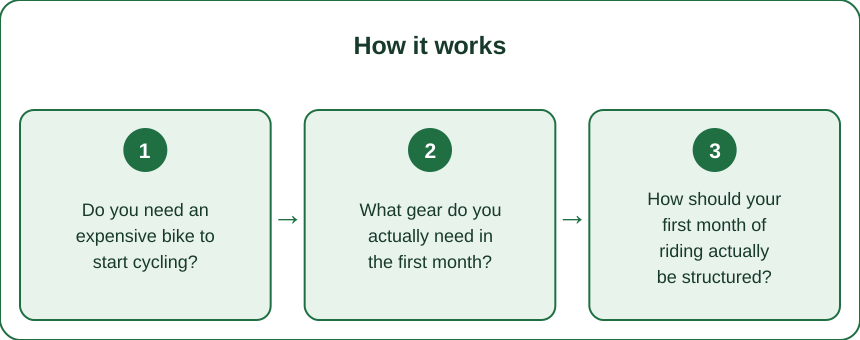
How should your first month of riding actually be structured?
Weeks 1-2: 3 short rides a week, 15-20 minutes each, flat terrain, easy effort. The goal is building tolerance for the saddle and getting comfortable with gear shifting and braking, not fitness.
Weeks 3-4: extend to 25-35 minutes, introduce one slightly hillier route, still 3x a week. You should finish each ride able to hold a conversation — if you can’t, you’re going too hard for this stage.
Weeks 5-6: one longer ride (45-60 minutes) alongside your regular shorter rides. This is where most beginners start feeling like ‘a cyclist’ rather than someone learning to ride.
Progressing distance or intensity by more than roughly 10-15% a week is the single most common way beginners either injure themselves or burn out on motivation before the habit sets in.

What are the gearing and shifting basics nobody explains clearly?
Lower gears (smaller front chainring, larger rear cog) make pedaling easier but slower — use them on hills or when starting from a stop. Higher gears do the opposite — more resistance per pedal stroke, more speed, used on flats or downhills.
The practical rule beginners miss: shift before you need to, not during the struggle. Approaching a hill, shift down a gear or two while you’re still pedaling easily — trying to shift while already straining under load is where chains skip and beginners lose momentum and confidence at the worst moment.
Aim for a pedaling cadence where your legs feel like they’re spinning smoothly, not grinding — somewhere around 70-90 pedal strokes per minute is a reasonable beginner target, adjusted with gearing rather than raw effort.
5 Mistakes That Turn Beginners Off Cycling
1. Buying a bike that doesn’t fit to save money, then blaming cycling itself for the discomfort.
2. Skipping padded shorts and assuming saddle pain is just something you push through — it’s genuinely avoidable.
3. Going too far too soon in week one, leaving you sore and unmotivated for week two.
4. Riding only in high-traffic areas without researching a calmer route first, which spikes anxiety and kills enjoyment.
5. Never learning basic maintenance — a flat tire with no idea what to do turns one bad ride into quitting entirely.
FAQ: Beginner Cycling Questions, Answered
How many days a week should a beginner cycle?
3 days a week with rest days between is a solid, sustainable starting cadence — daily riding as a total beginner raises injury and burnout risk without much added benefit early on.
Is cycling hard on the knees?
Properly fitted saddle height is the main factor — too low a saddle is the most common cause of beginner knee pain, easily fixed by raising it until there’s a slight bend at the bottom of the pedal stroke.
How long before cycling starts feeling easier?
Most beginners notice a real jump in comfort and endurance around week 4-6 of consistent 3x-weekly riding, once saddle tolerance and basic bike-handling become automatic.
TL;DR:
- Fit matters more than price — a properly fitted budget bike beats an expensive misfit
- Padded shorts are the highest-value first purchase for comfort
- Progress ride time by 10-15% a week max, not distance goals from day one
- Shift gears before you need to, not mid-struggle on a hill
- Most beginners feel like ‘real cyclists’ around week 4-6 of consistent riding
Most people who quit cycling in week one quit a fixable discomfort problem, not the sport itself.
Keep Reading
This article is for general informational and styling purposes only. Fit, sizing, and product availability may vary — check current details before purchasing.