Saddle Discomfort Isn't the Price of Cycling: the Women's Fit Guide Nobody Gives Beginners
Quick Answer: Saddle pain is a fit problem, not a toughness test: your sit bones must land on the saddle’s wide platform (width is measurable), the saddle should start dead level, and height errors amplify everything. Women’s higher rates of soft-tissue pressure complaints respond to cutout or short-nose designs. Soreness that’s muscular fades in 2 weeks of riding; numbness, sharp pain, or skin damage never should be ridden through. This is general information, not medical advice.
‘You get used to the saddle’ is cycling’s most quietly harmful advice — half true (sit-bone soreness does adapt) and half quitting-fuel (soft-tissue pressure and numbness never adapt; they escalate). Knowing which half you’re feeling changes everything.

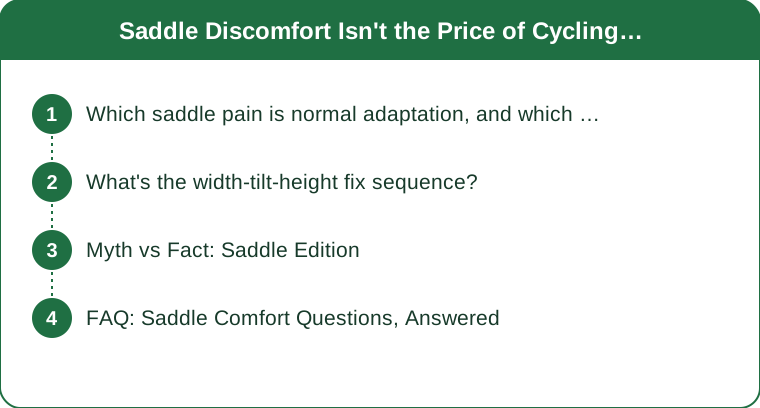
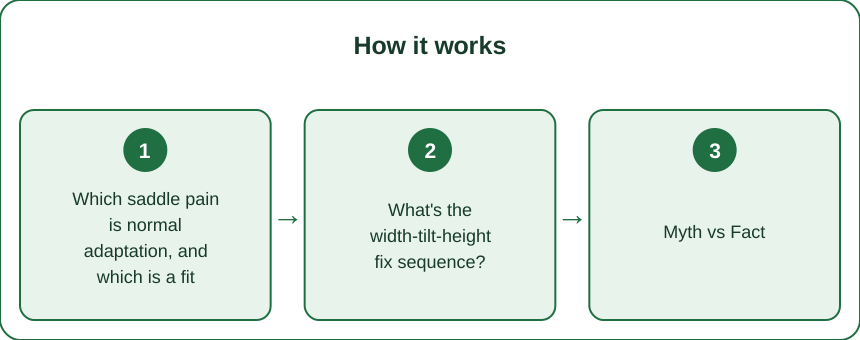
Which saddle pain is normal adaptation, and which is a fit error?
The split that beginners are never taught:
- Adapts in 1-2 weeks: general sit-bone soreness — the ‘bruised bones’ feeling on the two bony points — from tissues unaccustomed to bearing weight there. Ride modestly and regularly, and it genuinely fades.
- Never adapts, always a fit/equipment flag: numbness or tingling anywhere, sharp localized pain, soft-tissue (front) pressure and pain, skin chafing that breaks down, one-sided pain. These escalate with ‘toughing through’ and can cause real harm — numbness especially is a stop-and-fix signal, not a milestone.
Why women’s saddle complaints skew toward the second category: on-average wider sit-bone spacing meets stock saddles (historically designed around men’s measurements), and forward-leaning positions load soft tissue more in female anatomy. None of that is a toughness deficit — it’s an equipment mismatch with an equipment answer, which is exactly the good news.
What’s the width-tilt-height fix sequence?
Width first — it’s measurable: your sit bones should rest on the saddle’s widest platform. Bike shops measure sit-bone spacing in minutes (a gel pad you sit on), or DIY: sit on a piece of corrugated cardboard on a hard bench, measure between the two dent centers, add ~20-25mm for a typical riding posture. Saddles list their width — match it. Too-narrow saddles drop your sit bones off the edges and shove all load onto soft tissue; it’s the single most common women’s fit error.
Tilt second — start dead level: use a phone level app. Nose-up loads soft tissue directly; more than a hint nose-down slides you forward onto your arms all ride. Adjust in 1-degree sips only if level isn’t perfect after a week.
Height third — the amplifier: too-high saddles rock your pelvis side to side every pedal stroke, sawing sit bones across the shell (the classic chafe generator). Quick check: heel on pedal at the bottom of the stroke = leg just straight; riding position (ball of foot) then gives the correct slight knee bend. Hips visibly rocking = drop it 5mm and re-check.
Only after those three: consider a cutout or short-nose saddle — designs that remove or shorten the soft-tissue pressure zone, which large numbers of women report as the decisive upgrade. And padded cycling shorts worn as designed (no underwear) plus chamois cream for longer rides aren’t luxuries — they’re part of the interface.

Myth vs Fact: Saddle Edition
Myth: The thick squishy gel saddle is the comfortable choice. Fact: Counterintuitive but well-established — very soft saddles deform under sit bones and push padding up into the soft tissue between them, worsening exactly the pressure they promised to fix. Moderately firm + correct width beats plush + wrong width every ride longer than 20 minutes.
Myth: Saddle pain means add more padding (shorts + gel cover + gel saddle). Fact: Padding stacking creates squirm and heat; the fix hierarchy is width → tilt → height → saddle design → quality shorts. One correct layer beats three compensating ones.
Myth: Numbness just means you’re not used to it yet. Fact: Numbness is compressed nerves and restricted blood flow — it never adapts and shouldn’t be given the chance to. It responds to width, tilt, cutout designs, and position changes; persistent numbness despite fixes deserves a professional bike fit and, if symptoms linger off-bike, a medical conversation. This is general information, not medical advice.
The pattern: comfort marketing sells softness, but comfort physics is about load placement — bones bear weight happily, soft tissue never signed up for it.
FAQ: Saddle Comfort Questions, Answered
How long should I test a saddle before judging?
Give any change 3-5 rides — first-ride weirdness is real even on eventual winners. Many shops run saddle demo programs precisely because of this; use them before buying twice.
Are women-specific saddles necessary or marketing?
The label matters less than the specs: correct width for your measured sit bones + a pressure-relief design if you need one. Plenty of women ride ‘unisex’ short-nose saddles happily; the measurement outranks the marketing shelf.
Does standing on the pedals periodically help?
Genuinely — brief out-of-saddle moments every 10-15 minutes restore blood flow and reset pressure, and it’s standard endurance-rider practice, not cheating. Pair it with the fit fixes rather than using it to survive a bad saddle.
TL;DR:
- Split the pain: sit-bone soreness adapts in ~2 weeks; numbness, sharp, or soft-tissue pain are fit errors that never adapt
- Fix order: measured width (sit bones + ~20mm) → dead-level tilt → height without hip-rock → cutout/short-nose design
- Firm-and-correct beats soft-and-wrong; quality shorts worn properly are part of the interface
- Persistent numbness = professional fit, and lingering symptoms off-bike = medical conversation
Cycling was never supposed to hurt there — the sport’s best-kept secret is that the saddle aisle had your answer all along. This is general information, not medical advice.
Keep Reading
This article is for general informational and styling purposes only. Fit, sizing, and product availability may vary — check current details before purchasing.