Family Cycling: Getting Kids on Wheels and the Whole Household Riding Together
Quick Answer: Start kids on a balance bike around age two and skip training wheels entirely — balance first, pedals second, and the pedal transition usually takes one afternoon. Size family rides to the youngest rider, stop for snacks every 30 minutes, stick to greenways and rail-trails, and put helmets on everyone including the adults.
You picture the family bike ride: sunshine, a path by a river, everyone laughing.
The actual first attempt involves one child crying about a helmet, one bike with a flat you didn’t check, and a turnaround at the 800-metre mark.
Both versions are real. The difference between them is almost entirely preparation — and a progression that goes in the right order.
How Do You Teach a Kid to Ride a Bike?
Balance first. Pedals second. That’s the modern method, and it’s dramatically faster than the way most of us learned.
Age ~2: the balance bike. A pedal-less bike that the child pushes along with their feet. They learn the actual hard skill — balancing and steering a moving bike — while their feet never leave the ground. Kids typically go from walking it to gliding with both feet up within a few weeks.
Why skip training wheels: training wheels teach a child to ride a stable four-wheeled vehicle, which requires no balance at all. When the wheels come off, they have to unlearn that and start over. Balance-bike graduates skip that step entirely.
Age ~4-5: the pedal transition. Put a balance-bike graduate on a pedal bike with the seat low enough that both feet touch the ground flat. Find a gentle grassy slope. Let them glide, then say “put your feet on the pedals.” Most kids ride the same afternoon. Parents routinely describe this as suspiciously easy.
Ages 6+: the independence ladder. Driveway → empty parking lot → greenway → quiet residential street → anything busier. Each stage earns the next. Teach one traffic skill at a time rather than all of them on the day you first hit a road.
Teens: fit beats future-proofing. Buy the bike that fits this year. A too-big bike bought to grow into is genuinely harder to control and quietly destroys confidence. The used market exists for exactly this reason — buy secondhand, sell it on, repeat.
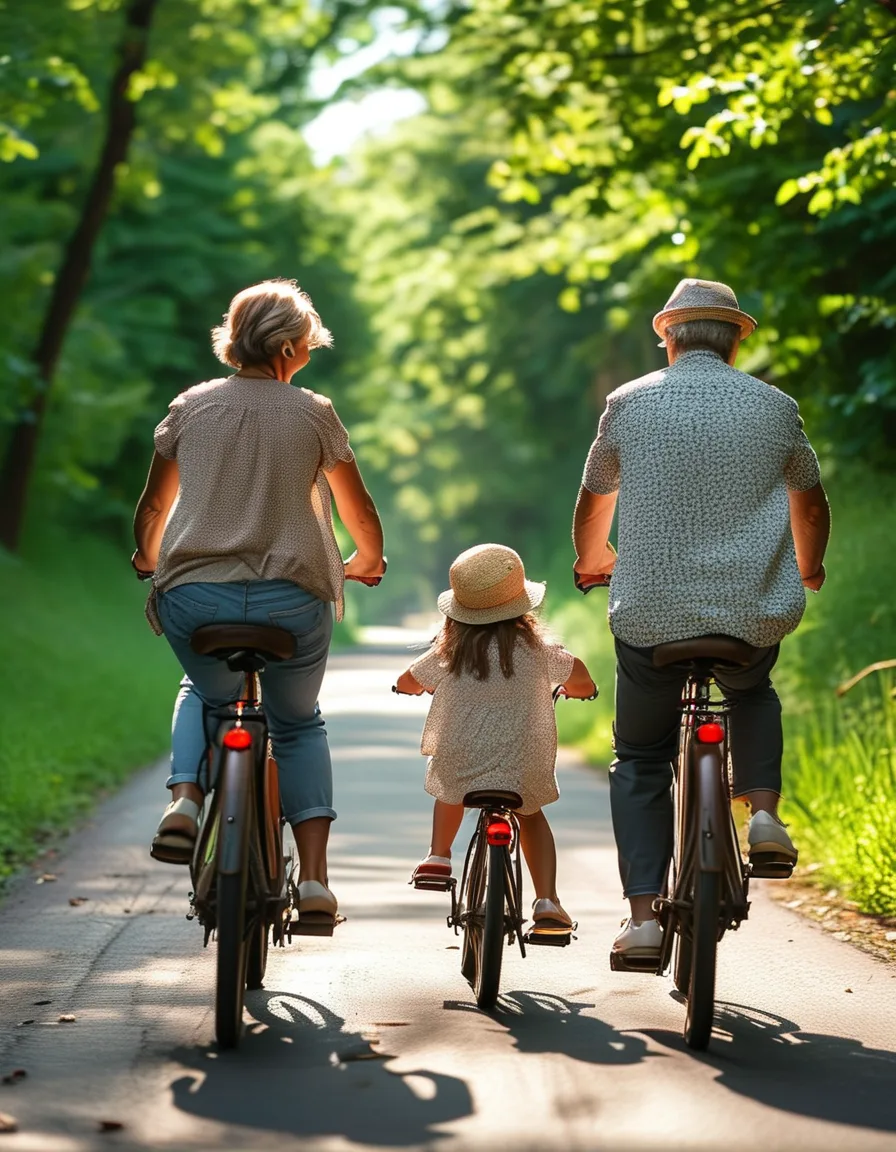
And the passenger years: child seats, trailers, and cargo bikes keep the adults riding during the pre-rider stage. Bonus: helmet-always culture starts in the trailer, long before anyone can argue about it.
What Makes a Family Ride Actually Work?
Choose car-free routes. Greenways, rail-trails, canal paths, and park loops. The single biggest predictor of a good family ride is not sharing space with traffic.
Size the ride to the youngest rider. A 5km ride is a marathon for a five-year-old. Your training goals do not get to ride along today — schedule those separately, or accept the trailer as your workout (towing 20kg absolutely counts).
Anchor the route to a destination. “Let’s ride for an hour” motivates nobody under twelve. “Let’s ride to the playground / the ice cream place / the pond with the ducks” works every time. The destination is the point; the riding is the transport.
Stop roughly every 30 minutes. Snack, water, sit down. A hungry child ends the ride regardless of what the plan said, and the warning window is about four minutes long.
Carry the kit: water, real snacks, a mini first-aid kit, a multi-tool, a pump, and a patch kit or spare tube. A flat tyre three kilometres out is either a ten-minute pause or a very long walk pushing two bikes.
Only ride in decent weather, at least at first. One miserable cold-and-wet ride can set the habit back a season. Protecting the joy is a strategy, not softness.
What Safety Habits Matter Most?
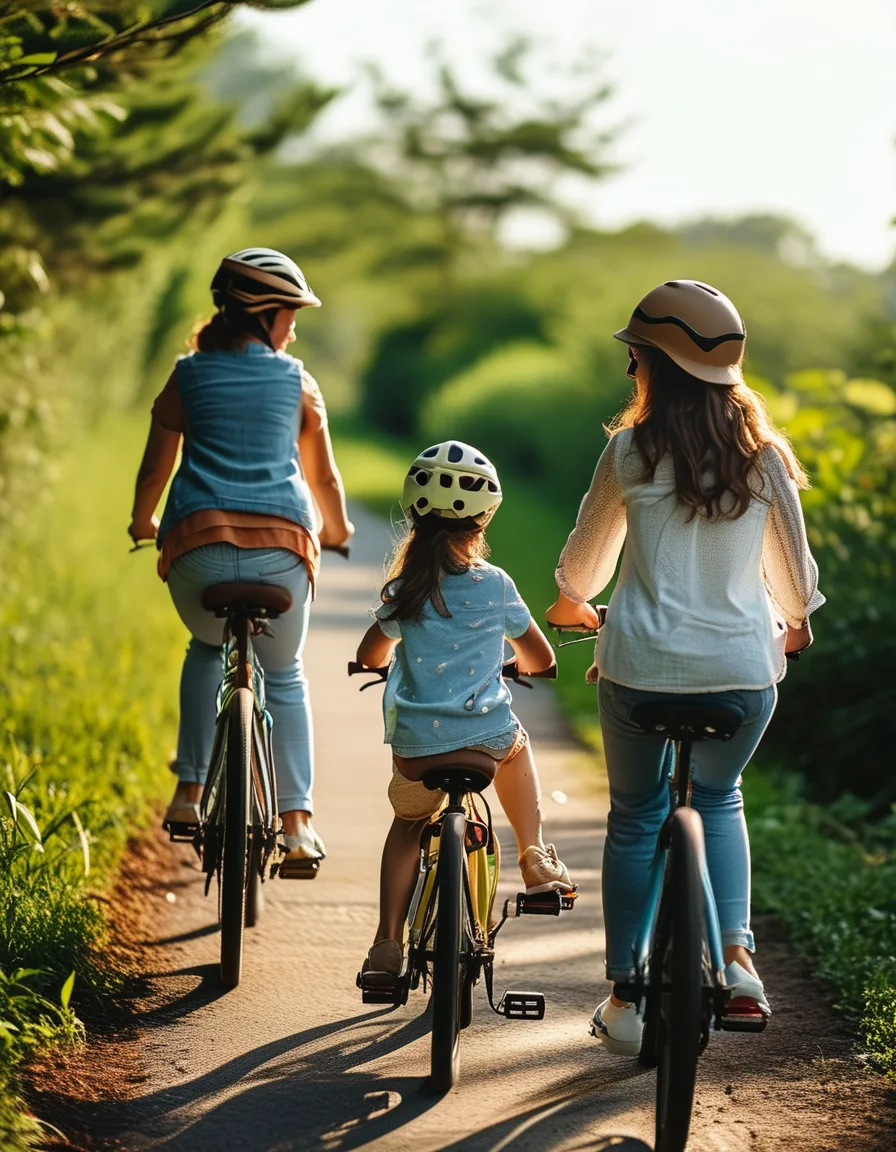
Helmets on everyone, every ride — parents included. Kids do what you do, not what you say. Check the fit: level on the head (not tipped back), snug enough that it doesn’t shift when you shake your head, and about two fingers’ width between eyebrow and rim.
Be visible. Bright colours, plus lights if there’s any chance of riding at dusk. Reflectors and a bell should be standard equipment on a kid’s bike.
Teach path etiquette as rules of a game. Keep right, call out when passing, stop at every crossing. Framed as rules rather than warnings, kids adopt them quickly and then enforce them on each other with great enthusiasm.
Run a monthly ABC check. Air (tyre pressure), Brakes (both work, pads aren’t worn), Chain (clean and lubricated). Teach the kids to do their own — it takes 90 seconds and builds real self-sufficiency.
Have a separation plan. An ID card in each kid’s pocket, a phone on an adult, and one rule everyone knows: if we get split up, stop where you are and wait.
What Nobody Tells You About Family Cycling
The first six rides are logistics, not recreation. Loading bikes, finding helmets, pumping tyres. It gets dramatically easier once everything has a designated spot in the garage — most of the friction is storage, not cycling.
The turnaround point is halfway in distance but not in energy. Kids ride out with enthusiasm and back on fumes. Plan the outbound leg at 40% of your total distance, not 50%.
Snacks are a safety device. Blood sugar drops in small humans arrive without warning and end everything. Pack twice what seems reasonable.
It’s one of very few activities that genuinely works across every age. A six-year-old wobbling and a forty-year-old spinning easily can share the same path and both enjoy it. That’s rarer than it sounds.
Saturday rides become an institution surprisingly fast. Do it four weeks in a row and the kids will start asking. That’s the actual goal — not fitness, not distance, but a household default that lasts into adulthood.
Mini FAQ
What age can kids start cycling?
A balance bike works from around age two, once they can walk confidently. Pedal bikes typically follow between four and six, though balance-bike graduates are often ready earlier. There’s wide normal variation — readiness matters more than the birthday.
How far can kids realistically ride?
As a rough guide, many 5-6 year olds manage 3-5km, 7-9 year olds 8-15km, and older kids considerably more. Start well below what you think they can do and let the successful ride be the memory.
Are trailers or child seats better?
Trailers carry more, ride lower, and handle two kids or a kid plus gear — but they’re bulkier to store. Child seats are simpler and cheaper but affect the bike’s handling noticeably. For regular family riding, most people end up preferring a trailer.
TL;DR:
- Balance bike at two, skip training wheels, and the pedal transition usually takes one afternoon.
- Size every ride to the youngest rider, and anchor it to a destination they care about.
- Stop every 30 minutes for snacks and water — hunger ends rides faster than legs do.
- Stick to greenways and rail-trails; earn road riding through demonstrated path skills.
- Helmets on everyone including parents, monthly ABC check, and a stop-and-wait separation plan.
- Make it a standing Saturday ritual — the habit is the part that lasts.
Keep Reading
This article is for general informational and styling purposes only. Fit, sizing, and product availability may vary — check current details before purchasing.