Padded vs. Regular: Cycling Leggings, Explained
Every new cyclist hits the same fork in the road. The padded shorts look a little goofy — like you’re wearing a diaper to brunch — and regular leggings are right there in the drawer, already comfortable, already yours.
Do you actually need the padding? Or is it a clever way to sell you a second pair of pants?
Straight answer, no upsell.
Quick Answer: The padding — a chamois — absorbs road shock, reduces friction, and wicks moisture where you meet the saddle. For rides under about 30 minutes, casual or indoor, regular squat-proof leggings are genuinely fine. Past roughly an hour, or if you’re riding several times a week, padded stops being optional. And whatever you buy: no underwear underneath a chamois.
What Does the Padding in Cycling Shorts Actually Do?
The cushioned insert is called a chamois (pronounced “shammy” — originally leather, now synthetic foam and fabric). It sits between you and the saddle and does three genuinely distinct jobs:
It absorbs road buzz and shock. Your sit bones — the two bony points at the base of your pelvis — take the impact of every crack, seam, and pothole. The chamois spreads and dampens that load.
It reduces friction. This is the underrated one. Discomfort on a bike is less often about pressure than about rubbing — thousands of tiny movements between skin and fabric over an hour. That friction is what produces chafing and, eventually, saddle sores. A chamois moves with you rather than against you, and the seams sit where they won’t rub.
It wicks moisture. A wet, salty contact area is exactly where skin breaks down. Chamois fabric pulls moisture away from a very sweat-prone area.
Notice what’s not on that list: it isn’t a soft cushion to sit on. People expect the chamois to feel like a pillow and are often mildly disappointed by how firm it is. It’s protective equipment, not upholstery.
Padded vs. Regular: Which Do You Actually Need?
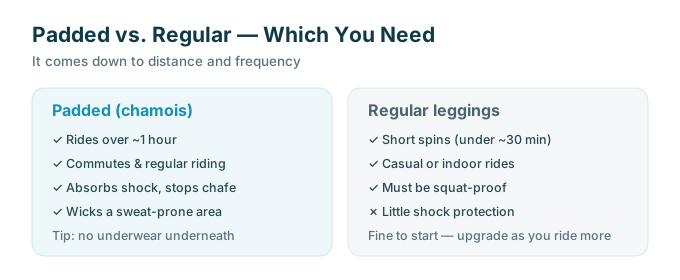
It comes down almost entirely to distance and frequency:
- Short spins under ~30 minutes, casual riding, or indoor cycling: regular squat-proof leggings are fine. Your sit bones haven’t had time to complain, and indoor bikes have you upright with less sustained pressure on any one spot.
- Rides over ~1 hour, commutes, weekend distance: padded, no question. Somewhere around mile ten is when the difference stops being theoretical.
- Riding three or more times a week: padded — and this is the case that matters most. The problem isn’t a single uncomfortable ride, it’s cumulative. Irritation that doesn’t fully heal between rides is what turns into saddle sores, and saddle sores are what make people quietly stop riding.
The 45-minute rule of thumb: if most of your rides are under 45 minutes, you can put this decision off. Over that, buy the padded pair.
5 Mistakes Everyone Makes With Padded Cycling Shorts
1. Wearing underwear underneath. The big one. A chamois is designed to sit directly against skin. Adding underwear introduces seams exactly where you don’t want them, traps moisture the chamois is trying to wick away, and reintroduces all the friction you paid to eliminate. It feels wrong for about one ride and then feels obviously correct forever.
2. Buying them loose. Cycling shorts should fit snugly — noticeably snugger than casual leggings. A chamois that shifts is a chamois that rubs, which is worse than no chamois at all. If there’s a visible gap or the pad moves when you walk, size down.
3. Assuming more padding is better. Thick padding sounds comfortable and often isn’t. Excess bulk creates its own friction and can put pressure in the wrong places. What matters is a well-shaped chamois positioned correctly for your anatomy, not maximum thickness.
4. Re-wearing them. Always wash after every ride, and let them dry fully. A damp chamois worn twice is a straightforward path to skin irritation. Store them dry, not stuffed in a gym bag.
5. Blaming the shorts when it’s the saddle. If you’re padded, properly fitted, and still uncomfortable, the shorts probably aren’t the problem. Saddle width needs to match your sit-bone width, and saddle height and tilt matter enormously. A basic bike fit — or even just a saddle-width measurement at a bike shop — solves more discomfort than any pair of shorts.
What About Comfort Beyond the Chamois?
A few things that matter more than most people expect:
Waistband. For anything over an hour, a high, wide waistband beats a thin elastic one. You’re bent forward at the hips for the whole ride, and a low waistband slides. High waist cycling leggings that stay put are a comfort upgrade independent of the padding.
Leg grippers. Silicone bands at the hem keep the leg from riding up. Without them, the hem creeps and you get a fold of fabric bunching at exactly the wrong place.
Seam placement. Look for flatlock seams, and check that there isn’t a seam running through the middle of the chamois. This is one of the clearest differences between a cheap pair and a decent one.
Breaking in. Your sit bones adapt over a few weeks of regular riding. Some initial soreness when you start cycling — or return after a layoff — is normal and improves. What isn’t normal: numbness, tingling, or persistent open sores. Numbness in particular is a signal to stop and get your saddle position checked, not something to push through.
FAQ
Can you wear regular leggings for cycling?
Yes, for short and casual rides. Squat-proof, moisture-wicking leggings handle a 20–30 minute spin or an indoor class perfectly well. The limitation shows up with duration — past about 45 minutes to an hour, the friction and sit-bone pressure that a chamois manages start to add up.
Do you really wear nothing under padded cycling shorts?
Correct — nothing underneath. The chamois is engineered to sit directly against skin, and underwear adds seams, traps moisture, and creates the exact friction the pad exists to prevent. It’s the most common beginner mistake and the easiest one to fix.
How long do padded cycling shorts last?
Typically one to three seasons for a regular rider, depending on mileage and washing. The chamois compresses over time and loses cushioning before the fabric visibly wears out, so the usual signal is that rides you used to find comfortable start feeling harsh again. Washing cold and air-drying meaningfully extends their life.
TL;DR:
- The chamois absorbs shock, reduces friction, and wicks moisture. It’s protective equipment, not a cushion.
- Under ~30 min, casual, or indoor: regular squat-proof leggings are fine.
- Over ~1 hour, or riding 3+ times a week: padded, no question.
- No underwear under a chamois. Ever. It defeats the whole design.
- Fit snug — a shifting pad rubs. And more padding isn’t better; correct shape and position is.
- Wash after every ride and dry fully.
- Still uncomfortable with good shorts? It’s probably saddle width or fit, not the shorts.
See It in Motion
Seen here: High Waist 8” Yoga Shorts — shop similar styles on bubblelime.com
Keep Reading
This article is for general informational and styling purposes only. Fit, sizing, and product availability may vary — check current details before purchasing.