Saddle Sore? 7 Fixes That Make Cycling Comfortable Again
Nothing kills the joy of cycling faster than a saddle sore. One bad ride and suddenly every pedal stroke is a negotiation with your own body, and the bike you were excited about starts living in the garage.
The good news, and it’s genuinely good: saddle soreness is almost never something you have to accept. It’s a fit-and-friction problem with a short list of causes.
Quick Answer: Saddle sores come from friction, pressure, moisture, and bacteria — usually in combination. The four fixes that solve it for most riders: proper padded shorts, no underwear underneath, chamois cream on the contact points, and a correctly adjusted saddle. Add clean dry kit after every ride and gradual mileage increases. If a sore has already formed, rest it — riding through one makes it worse and takes longer.

What Actually Causes Saddle Sores?
Four factors, and they compound each other:
Friction. Repeated rubbing between skin, shorts, and saddle. This is the primary driver, and it’s why “more padding” often isn’t the answer — a thick pad that shifts around causes more rubbing than a thin one that stays put.
Pressure. Sustained load on soft tissue, usually because the saddle is the wrong width or angle for your anatomy and the weight is landing where it shouldn’t.
Moisture. Sweat softens skin and makes it far more vulnerable to friction damage. Wet kit is a multiplier on everything else.
Bacteria. Damaged, damp skin plus bacteria is how irritation becomes an actual sore — typically an infected hair follicle or blocked gland.
Understanding this is genuinely useful, because it explains why the fixes work. You’re not treating a mystery. You’re removing one factor at a time from a four-part problem.
The 7 Fixes That Actually Work
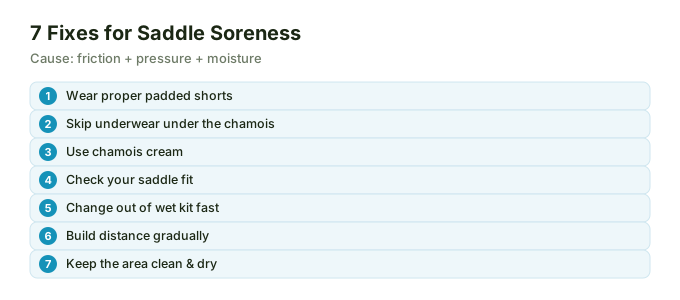
1. Wear proper padded shorts
The single biggest fix. A chamois cushions pressure, moves with you instead of against you, and wicks moisture away. Non-negotiable for anything over about 45 minutes. Fit them snug — a chamois that shifts is a chamois that rubs.
2. Skip the underwear
Seriously. A chamois is designed to sit directly against skin. Underwear adds seams exactly where you don’t want them, traps the moisture the chamois is trying to move, and reintroduces the friction you just paid to eliminate. It feels wrong for one ride and obviously correct forever after.
3. Use chamois cream
An anti-friction balm applied to the contact points — and to the pad itself. It feels strange the first time and it works. This is the highest-value, lowest-cost item on the list, and the one experienced riders reach for on any long day.
4. Check your saddle fit
A saddle that’s too high makes your hips rock side to side with every stroke, which is a friction machine. Too far forward, too far back, or tilted nose-up all concentrate pressure in the wrong place.
Two things to check: saddle height (a slight bend in the knee at the bottom of the stroke, hips not rocking) and saddle width (it should support your sit bones — most bike shops will measure them in five minutes, and a saddle that’s too narrow is a very common and very fixable cause).
5. Get out of wet kit fast
Change and shower reasonably soon after riding. Sitting around in damp shorts post-ride is one of the most reliable ways to turn mild irritation into a genuine sore.
6. Build up gradually
Sudden long rides on unadapted skin produce sores. Your sit bones and skin genuinely do toughen with consistent riding, but that takes weeks. A common guideline is increasing your weekly distance by no more than about 10% at a time.
7. Keep the area clean and dry
Clean shorts every single ride — no re-wearing, even if they seem fine. Dry skin before dressing. Basic, unglamorous, and prevents most problems.
What Nobody Tells You About Saddle Sores
Your saddle probably matters more than your shorts. Most people buy better shorts first because it’s the easier purchase. But if pressure is landing on soft tissue instead of your sit bones, no amount of padding fixes it. If you’ve done fixes 1–3 and you’re still sore in the same spot every ride, the answer is saddle width or position, not more gear.
A more padded saddle is usually worse. Counterintuitive, but very squishy saddles let your sit bones sink in so pressure spreads onto the soft tissue around them. Firm and correctly sized beats soft and generic.
Numbness is a different, more urgent signal. Soreness is a friction and pressure problem. Numbness or tingling means nerve compression, usually from saddle angle or too much weight forward. Don’t ride through numbness — adjust the saddle, and get a bike fit if it persists.
Women’s-specific saddles exist for a reason. Sit bone width and soft-tissue anatomy differ, and cutout or relief-channel designs address a real problem. If you’re on the saddle the bike shipped with, that’s worth revisiting.
Shaving and waxing can make it worse. Hair removal in the contact area increases ingrown hair and folliculitis risk, which is exactly the mechanism behind many saddle sores.
What Should You Do If You Already Have a Saddle Sore?
Rest it. This is the part people hate and it’s the fastest route back.
Riding through a saddle sore keeps applying the exact friction and pressure that caused it, so a two-or-three-day problem becomes a two-week one. Take the days off, or cross-train — running, swimming, and strength work all avoid the area entirely.
While it heals: keep the area clean and dry, wear loose breathable clothing, and leave it alone. Don’t squeeze or lance it — that’s how a minor irritation becomes an infection.
See a doctor if: the sore is large, increasingly painful, hot, spreading redness, producing pus, or you develop a fever. Also if you’re getting them repeatedly despite doing everything above, since recurring sores can point to an underlying issue or a fit problem that needs professional assessment. Persistent numbness warrants a bike fit and, if it doesn’t resolve, medical advice.
FAQ
How long does a saddle sore take to heal?
A mild one usually settles in two to four days with rest and hygiene. A deeper or infected sore can take one to two weeks and may need medical treatment. The single biggest variable is whether you keep riding on it — continued friction can turn a few days into a few weeks.
Can you ride with a saddle sore?
You can, but you generally shouldn’t. Riding reapplies the friction and pressure that created the problem and reliably extends the healing time. If you absolutely must ride, keep it short, use extra chamois cream, and shift your position frequently — but taking two or three days off is almost always faster overall.
Are saddle sores a sign you have the wrong saddle?
Sometimes, and it’s worth checking if the sores are recurring in the same place. A saddle that’s too narrow for your sit bones puts pressure on soft tissue rather than bone, which is a very common cause. Most bike shops will measure your sit bone width quickly and for free, and it’s the most useful single diagnostic if better shorts and chamois cream haven’t solved it.
TL;DR:
- Saddle sores = friction + pressure + moisture + bacteria. Remove factors one at a time.
- Padded shorts, no underwear, chamois cream, correct saddle fit solve it for most riders.
- Fit them snug — a shifting chamois rubs more than none at all.
- Change out of wet kit fast and wash shorts after every single ride.
- Build mileage gradually — roughly 10% per week. Skin and sit bones adapt, but slowly.
- Softer saddles are often worse. Firm and correctly sized for your sit bones beats squishy.
- Numbness is different from soreness — that’s nerve compression. Stop and adjust, don’t push through.
- Already sore? Rest it. Riding through makes a 3-day problem a 2-week one. See a doctor if it’s spreading, hot, or feverish.
Keep Reading
This article is for general informational and styling purposes only. Fit, sizing, and product availability may vary — check current details before purchasing.