Why Spinning Up Hills Beats Grinding, Even When It Feels Slower
Quick Answer: Grinding a big gear up a hill loads your muscles with high-force contractions that burn through your limited anaerobic reserve and stress your knees; spinning a lighter gear at 75 to 90 rpm shifts the same work onto your cardiovascular system, which recovers in minutes instead of the better part of an hour. Grinding feels faster because force reads as effort — but perceived power and delivered power are different things, and the rider who spins arrives at the top able to keep riding hard while the grinder arrives cooked.
If every ride with hills leaves your quads trashed and your pace collapsing after the third climb, your legs are fine. Your gear choice is writing checks they have to cash.
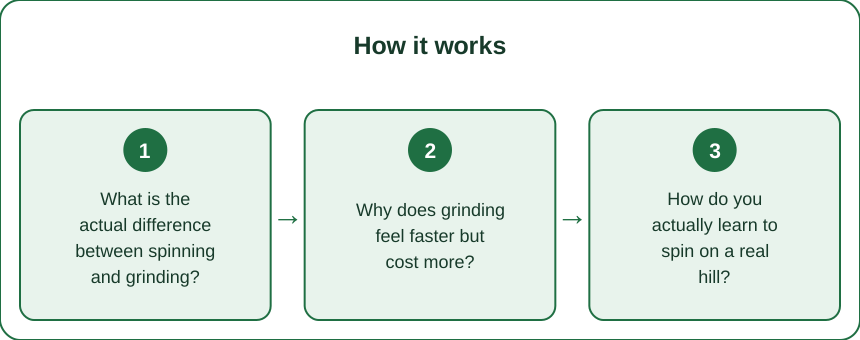
What is the actual difference between spinning and grinding?
The same climb, paid from two different accounts.
Getting up a hill requires a fixed amount of work: your weight, the bike, the height gained. Power is force on the pedals multiplied by how fast you turn them — which means you can buy the same power with high force at low cadence (grinding) or low force at high cadence (spinning).
The accounts those draw on are not equal. High-force pedaling recruits your fast-twitch muscle fibers — powerful, quick to fatigue, fueled substantially by anaerobic pathways that produce the deep burn and take a long time to replenish. Low-force, faster pedaling stays within your slow-twitch fibers — endurance specialists running on the aerobic system, which is slower to feel impressive and nearly bottomless by comparison.
Grinding also concentrates joint load. Each slow, heavy pedal stroke drives high compression through the knee; multiply by a long climb and you have the classic recipe for the aching kneecaps riders blame on riding in general. Spinning divides the same total work into thousands of lighter strokes.
Think of it as carrying groceries upstairs: one crushing trip with every bag, or three easy trips. The stairs get climbed either way — the difference is what state your arms are in afterward, and grinding is the one-trip strategy applied to every hill on the route.
Why does grinding feel faster but cost more?
Because your effort meter is miscalibrated for force.
Perceived exertion tracks muscular strain more vividly than cardiovascular strain — pressure through the legs registers as doing something in a way that faster breathing does not. Grinding supplies that pressure, so it feels powerful. Meanwhile spinning moves the strain to your lungs and heart, which reads as being out of shape even when your speed is identical. Riders consistently overestimate their grinding pace and underestimate their spinning pace; a bike computer settles the argument quickly.
The real difference appears after the summit. High-force work spends what physiologists treat as a limited budget of anaerobic capacity — burn a chunk of it on one climb and it refills over tens of minutes, not seconds. A grinder finishes climb one having spent reserves she will still be missing on climb three. The spinner spent almost none, recovered on the descent, and starts the next hill at nearly full strength.
This is why the pattern of a grinding ride is so recognizable: strong first hill, decent second, collapse on the third, quads wrecked for two days. Nothing about fitness changed mid-ride — the account ran dry.
There is a place for the big gear: short punchy rollers you can crest in twenty seconds of momentum. As a default climbing strategy, it is borrowing at high interest on every single hill.
How do you actually learn to spin on a real hill?
Three habits, in order of importance.
Shift before the hill, not on it. The most common failure is arriving at the steep part in the big gear, losing momentum, and then trying to shift under full pedal pressure — which grinds the drivetrain and sometimes refuses entirely. Shift down as the grade begins, while your legs are still light. Early shifting feels premature for exactly one week, and then it feels like the only sane way.
Hold 75 to 90 rpm and let speed float. You do not need a sensor: count one leg’s pedal strokes for fifteen seconds — 19 to 22 is your zone. If you are below 70 and your breathing is easy while your thighs scream, shift down. If you are above 95 and bouncing in the saddle, shift up one. The gear that keeps your breathing hard-but-sustainable and your legs merely working is the right gear, and on a steep grade it may be your easiest one. That is what it is for.
Stay seated as the default, stand as the tool. Seated climbing is more efficient for anything long; standing burns more energy but recruits fresh muscle briefly. Use ten-second standing bursts to crest a steep pitch or relieve pressure, then sit and resume spinning. Riders who stand the whole climb are grinding vertically.
Give the retrain three weeks of choosing the easier gear on every hill, on purpose, even when pride argues. The day you finish a hilly ride with legs that still feel like yours is the day the argument ends.
Five Hill Mistakes That Have Nothing to Do With Fitness
Attacking the bottom. The surge you can hold for the first 200 meters sets a debt the rest of the climb collects. Start one notch easier than feels right; pass people at the top instead of being passed there.
Death-gripping the bars. Climbing tension migrates into shoulders and wrists, which wastes energy and locks your breathing. Loose fingers, elbows soft, and your upper body stops taxing your lower body.
Holding your breath on the steep bits. Almost universal under strain. Exhale deliberately on every second or fourth pedal stroke and the rhythm returns on its own.
Staring at the summit. A long look at how much remains reliably produces a pace judged by hope rather than by legs. Ride the ten meters you are in; glance up occasionally for navigation, not morale.
Wearing the wrong layers for a climb-descent ride. You generate serious heat climbing and then drop into a fast, cool descent — in late summer especially, a back-pocket vest or light shell turns the descent from teeth-chattering to pleasant. Snug kit matters here too: high-waisted leggings or bibs that stay put in a bent-over climbing posture beat anything that gaps and flaps when the road tips down.
FAQ: Climbing Cadence, Answered
My knees ache after hilly rides. Is grinding really the cause?
It is the usual suspect — high-force low-cadence work drives peak compressive loads through the kneecap far beyond what spinning produces. Raise cadence, check that your saddle is not too low, and if pain persists through those changes, have a professional look at fit and form.
Is there such a thing as spinning too fast?
Yes — past your controllable cadence, you bounce in the saddle and waste energy stabilizing. If your hips rock or your heart rate spikes without added speed, shift up one gear. The zone is brisk and smooth, not frantic.
Should I buy easier gearing or just get stronger?
Both are legitimate, but gearing is the fast fix: a wider cassette is one of the cheapest meaningful upgrades in cycling. If your easiest gear still forces you below 70 rpm on local climbs, the bike is arguing for the swap.
Does all this apply on an e-bike?
Completely — assist multiplies your input but the cadence physiology is unchanged, and spinning keeps the motor in its efficient range too. Riders who grind on e-bikes drain batteries and knees at the same time.
TL;DR:
- The same climb can be paid with high force (grinding, anaerobic, slow to recover) or high cadence (spinning, aerobic, recovers in minutes).
- Grinding feels faster because force reads as effort; the computer and the third hill tell the truth.
- Shift before the grade, hold 75 to 90 rpm, stay seated by default, stand in ten-second bursts.
- Aching knees after hills point at low cadence first — and easier gearing is the cheapest fix in the sport.
On your next hilly ride, take every climb one gear easier than pride prefers and count your cadence once per hill. Compare how the last climb feels to how it felt last week — that comparison usually retires the big gear for good.
Keep Reading
This article is for general informational and styling purposes only. Fit, sizing, and product availability may vary — check current details before purchasing.