Why Your Cadence Feels All Wrong the Moment You Hit a Hill
Quick Answer: Cadence that feels smooth on flat ground often drops 15-20 rpm on climbs because gearing, not fitness, is usually the limiting factor — most riders simply aren’t shifting down early or often enough as the grade increases.
You settle into a nice 85-90 rpm rhythm on flat roads, then hit a rise and everything falls apart — legs feel heavy, cadence drops into the 50s, and it feels like your fitness just vanished. It didn’t. Something mechanical shifted underneath you.

What actually changes about pedaling on a hill?
On flat ground, a given gear lets you maintain cadence with moderate force per pedal stroke. As the road tilts up, gravity adds resistance, and if you stay in the same gear, each pedal stroke now requires dramatically more force to maintain the same speed — your legs simply can’t turn the cranks as fast under that load, so cadence drops involuntarily rather than by choice.
This is a mechanical reality, not a fitness failure. Even elite riders see cadence drop on steep grades if they don’t shift enough. The fix lives in your gearing decisions, made early, not in gritting your teeth through the climb.
Why do most riders shift too late?
There’s a natural instinct to hold a gear as long as it feels manageable, which means most riders start climbs already under-geared and only shift once cadence has already crashed. By the time a gear change feels necessary, you’re already fighting the hill instead of riding it. The better habit is anticipatory shifting — downshift 1-2 gears right as the grade begins to change, before your legs register the extra load, so cadence never has the chance to bottom out.
This takes some deliberate practice because it means shifting slightly before your body says you need to. Riders who make this adjustment consistently report climbs feeling noticeably less punishing within a few rides.
What cadence should you actually target on climbs?
Most coaches suggest 70-80 rpm as a sustainable climbing cadence for moderate grades, dropping to 60-70 rpm only on the steepest sections where lower gears run out. Going much below 60 rpm for extended periods puts disproportionate strain on your knees and quads compared to spinning a slightly higher cadence in an easier gear.
If your bike’s lowest gear still leaves you grinding below 60 rpm on your regular climbing routes, that’s useful information — it may be worth a wider-range cassette or a compact crankset rather than accepting the grind as normal.
How does seated versus standing position change this?
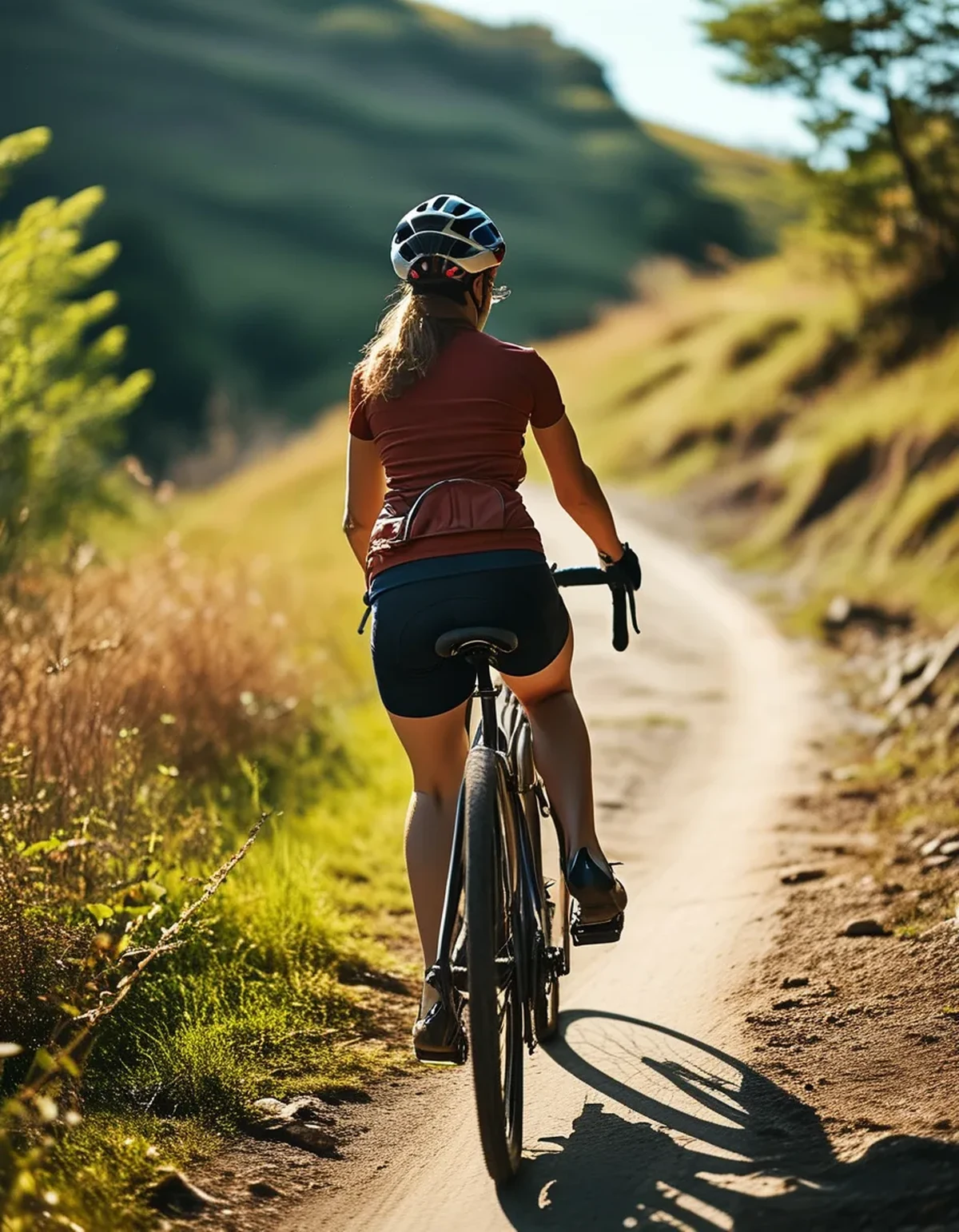
Standing on the pedals shifts your body weight into the stroke and can help push through short, steep sections, but it also tends to spike heart rate faster than seated climbing at the same speed. Alternating between seated spinning and brief standing efforts — rather than committing to one position for an entire climb — lets you recruit slightly different muscle groups and delay fatigue in any single area.
A useful pattern for longer climbs: stay seated for the bulk of the effort, and stand only briefly over the steepest 20-30 meters or to reset your position when your lower back starts to feel it.
Myth vs Fact: Climbing Cadence
Myth: Mashing a big gear slowly builds more climbing strength. Fact: It builds some strength, but at a real cost to joint stress and cardiovascular efficiency compared to spinning an easier gear at higher cadence.
Myth: Elite climbers all use very high cadence. Fact: Pro climbing cadence varies widely by rider and grade, commonly landing in the 70-85 rpm range on sustained climbs — not dramatically different from a well-trained amateur’s target.
Myth: If you’re breathing hard, you’re in the wrong gear. Fact: Hard breathing on a climb is expected; the gear question is really about whether your legs, not your lungs, are the limiting factor.
What role does bike fit play in climbing cadence problems?
A saddle set too low forces your knees into a more bent position at the top of the stroke, which reduces how efficiently you can apply power — this shows up disproportionately on climbs where every watt counts more. Even a 1-2cm saddle height error can measurably affect climbing efficiency, more than it does on flat riding where the power demand is lower.
If climbing consistently feels harder than your flat-road fitness would suggest, a basic fit check — saddle height, fore-aft position, cleat alignment — is worth ruling out before assuming it’s purely a fitness or gearing issue.
FAQ: Climbing Cadence Questions, Answered
Should I get a wider-range cassette for hilly routes?
If you’re regularly grinding below 60 rpm on your usual climbs, yes — a cassette with easier low gears (like an 11-32 or 11-34) gives you room to spin instead of grind, without changing your fitness at all.
Is it normal for cadence to feel different every ride on the same hill?
Somewhat — fatigue, wind, and even tire pressure shift how a climb feels, but a consistent gearing and shifting habit should keep cadence in a similar range ride to ride.
Does higher cadence climbing burn more calories?
Marginally, due to the extra movement, but the difference is small compared to the efficiency and joint-health benefits of avoiding low-cadence grinding.
TL;DR:
- Cadence drops on hills mainly because of gearing, not a sudden loss of fitness
- Shift down early, before your legs feel the extra load, not after
- Target roughly 70-80 rpm on moderate climbs, 60-70 on the steepest sections
- Mix seated spinning with brief standing efforts rather than picking one for the whole climb
- A basic bike fit check can rule out saddle height as a hidden culprit
Next hill you hit, watch your cadence number instead of just your effort — it’ll tell you whether the problem is your gear choice or your legs.
Keep Reading
This article is for general informational and styling purposes only. Fit, sizing, and product availability may vary — check current details before purchasing.