Why Your Knee Clicks at the Top of the Pedal Stroke (and What It Actually Means)
Quick Answer: A knee click specifically at the top of the pedal stroke is most often caused by minor cleat or saddle position misalignment causing slight kneecap tracking deviation at that point in the rotation, not cartilage damage — most cases are painless and resolve with small bike fit adjustments. Persistent pain alongside the click is a different matter worth checking with a professional.
A click at the same point in every pedal rotation, without pain, is one of the more common and least concerning cycling knee sounds — it’s usually a fit issue, not a joint problem.
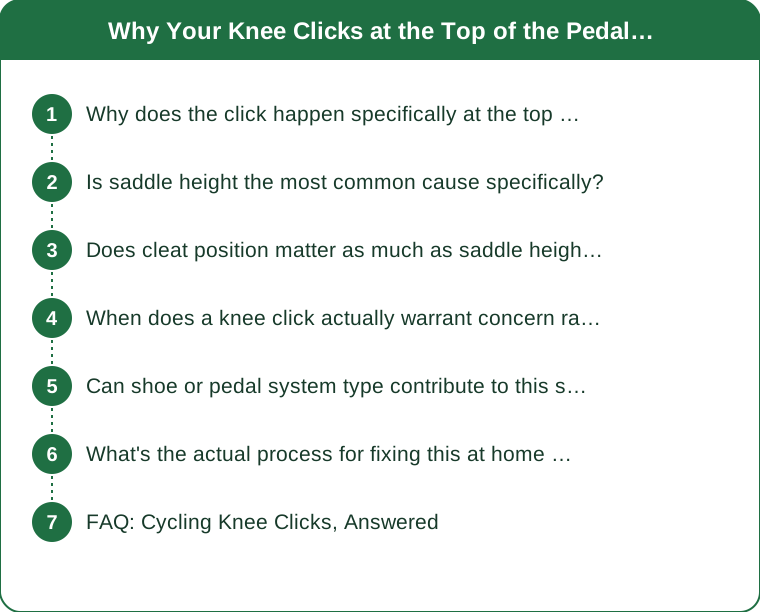
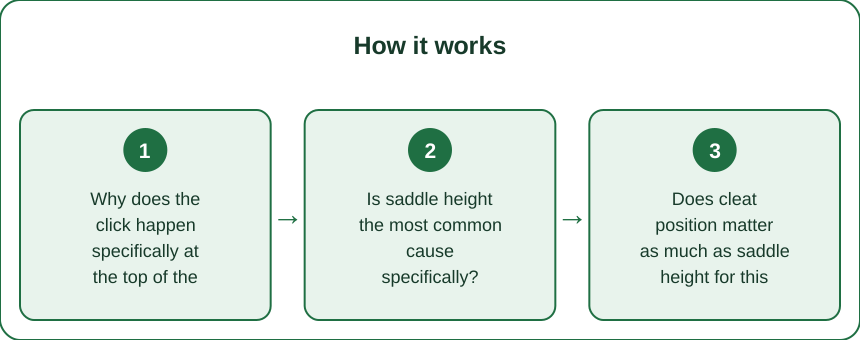
Why does the click happen specifically at the top of the stroke and not elsewhere?
The top of the pedal stroke is where the knee reaches its most flexed position and the kneecap’s tracking path is most sensitive to small alignment deviations — minor saddle height or cleat position issues that don’t affect the mid-stroke power phase can still cause a subtle tracking shift precisely at this most-flexed point, producing the click.
Is saddle height the most common cause specifically?
It’s one of the top two along with cleat alignment — a saddle set slightly too low increases knee flexion at the top of the stroke beyond the optimal range, which can change how the kneecap tracks in its groove at that specific point. Raising the saddle even 3-5mm is a commonly cited first adjustment to test.
Does cleat position matter as much as saddle height for this specific click?
Often more so — cleat rotation or fore-aft position affects how the knee tracks throughout the entire stroke, but a misalignment can be most noticeable at the top of the stroke where the joint angle is most acute. A bike shop fitting or careful self-adjustment of cleat rotation is a commonly recommended fix specifically for a top-of-stroke click.
When does a knee click actually warrant concern rather than a fit adjustment?
A click accompanied by pain, swelling, a sensation of catching or locking, or that worsens over multiple rides is meaningfully different from a painless click and warrants seeing a doctor or physical therapist rather than assuming it’s a simple fit issue — painless clicking alone is rarely a sign of underlying joint damage.
Can shoe or pedal system type contribute to this specific click?
Yes — the specific pedal and cleat system (different clipless systems have different float and release angle characteristics) can change how much lateral knee movement is possible during the stroke, and a system with very limited float combined with a slight alignment issue can make a top-of-stroke click more likely than a system with more forgiving float.
What’s the actual process for fixing this at home before seeing a fitter?
Small incremental saddle height adjustments (a few millimeters at a time) combined with checking cleat rotation matches your natural foot angle is the standard self-diagnosis approach — testing one variable at a time over a few rides isolates which adjustment actually resolves the click rather than changing multiple things simultaneously.
FAQ: Cycling Knee Clicks, Answered
Is a knee click on only one side (not both) more concerning?
A one-sided click can simply reflect a slight asymmetry in leg length or cleat setup rather than indicating anything more serious, though it’s still worth adjusting fit for that side specifically.
Does pedaling cadence affect how noticeable the click is?
Some riders notice the click more at lower cadences with higher torque per pedal stroke, since the joint angle changes are more pronounced at slower rotation speeds.
Should you stop riding if you notice a new painless click?
Generally not necessary — a new painless click is common enough to simply monitor and address through fit adjustment, rather than requiring an immediate stop to riding.
This is general information, not medical advice — persistent pain alongside a click should be evaluated by a doctor or physical therapist rather than addressed through fit adjustment alone.
TL;DR:
- A top-of-stroke knee click is usually caused by minor saddle height or cleat alignment issues
- The top of the stroke is where knee flexion is most acute, making small fit issues most noticeable there
- Painless clicks rarely indicate joint damage and often resolve with small fit adjustments
- Pain, swelling, or catching alongside a click is a different situation worth professional evaluation
A painless click at the same point every rotation is a fit clue, not a red flag — a few millimeters of saddle or cleat adjustment usually resolves it.
Keep Reading
This article is for general informational and styling purposes only. Fit, sizing, and product availability may vary — check current details before purchasing.